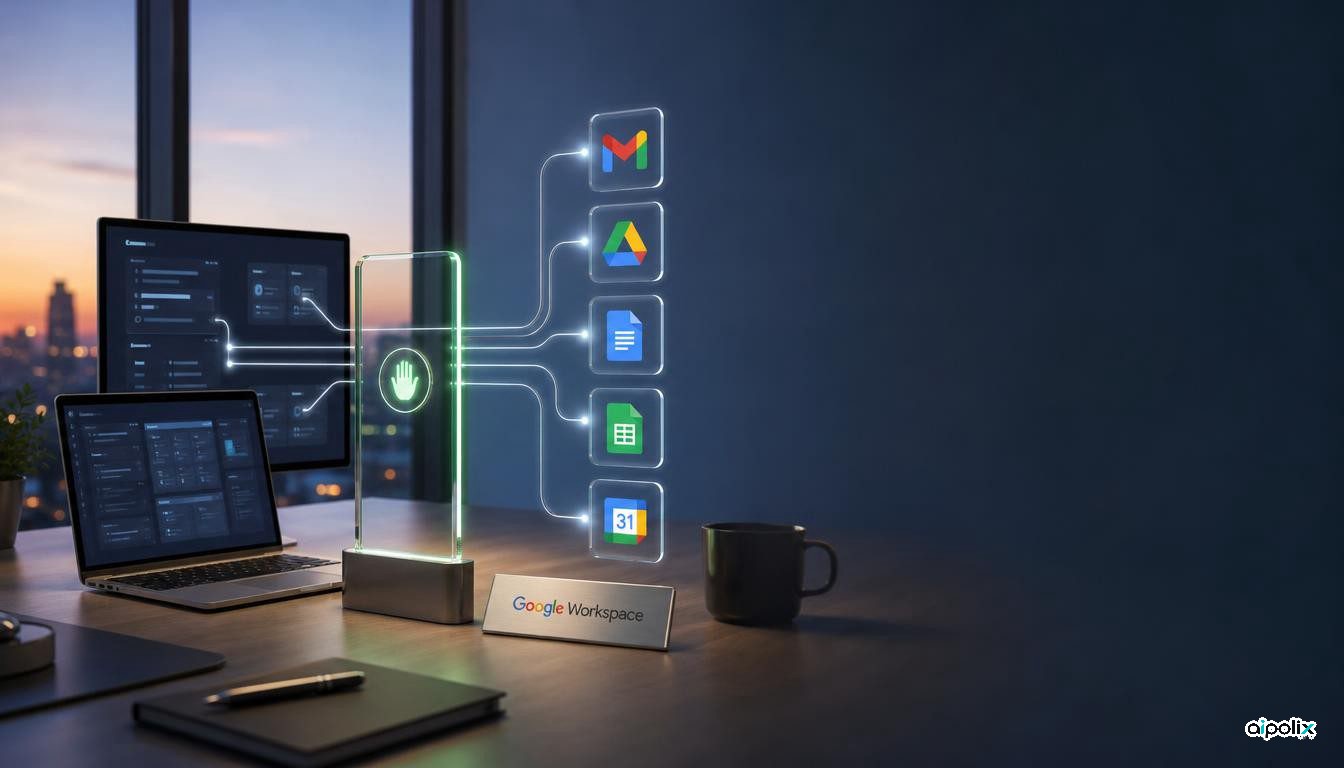
Google is changing the rules for AI agents that work inside Gmail, Drive and the rest of Workspace. On November 24, 2026 the company made its Workspace MCP servers and the Workspace command-line tool generally available, and told developers that agents will have to reach Workspace data through those two routes rather than the classic REST APIs. Technical enforcement of that requirement starts on February 1, 2027.
The MCP servers are Google-hosted endpoints built on the Model Context Protocol. They expose ready-made tools for Gmail, Calendar, Chat, Tasks, Drive, Docs, Sheets and Slides, with Keep listed as coming later. The CLI covers the other half of the market: agents that run locally in a developer terminal, a virtual machine or a container sandbox. Google says it ships with packaged agent skills, discovers commands at runtime and returns structured JSON. A preview version of the CLI appeared on GitHub in March, according to The Next Web.
Google's argument is that its REST APIs were designed for software acting at human pace, where a valid OAuth token was a fair signal that a person wanted the action. An agent can act continuously and much faster, so the company wants policy checks inside the request path. Every call through the new interfaces is checked against the organization's Workspace permissions, data loss prevention rules and classification labels. Drafting an email or summarizing a file can run unattended, but sending mail, changing Drive sharing or making bulk edits requires explicit confirmation from the user. Agents must register their own OAuth client IDs flagged as agentic, and administrators can review, audit and revoke them from the Admin console.
The commercial side changes too. Workspace APIs, MCP servers and the CLI now have two usage tiers, applied first to Gmail, Calendar and Drive. The Standard tier is free with published rate limits, which Google's developer documentation puts at a ceiling of 5,000 daily requests for each product in each project on the GA MCP servers. A Scaled tier offers higher quotas, and from April 1, 2027 projects on it pay for usage above daily free allowances. Projects used only inside one organization can be marked internal to keep higher limits within the subscription.
A new Workspace AI Tools Addendum sets data rules for agents and the harnesses around them. Google says it rules out keeping raw data indefinitely, training models on it, holding derived data for long periods and scraping the APIs, and it requires data removal when a user disconnects. Independent coverage from The Next Web adds that the terms also prohibit building rival services on Workspace data.
On the Google Cloud side, the company introduced Agent Gateway, a gateway for LLM, MCP and Agent2Agent traffic that validates each agent's identity in Agent Registry, enforces IAM policies, blocks outbound traffic by default and filters requests through Model Armor, Google's prompt-injection filter.
For anyone building agents that touch corporate email and documents, the practical deadline is now fixed: integrations that call Workspace REST APIs directly will be limited to Standard quotas once enforcement begins. Several promised controls are not live yet. Google lists user-level views of agent activity, time-limited approvals and AI access restrictions that extend DLP and client-side encryption to agents as coming soon. How strictly Google will classify a tool as an agent, and how pricing above the free allowances will look in practice, remain open questions.