
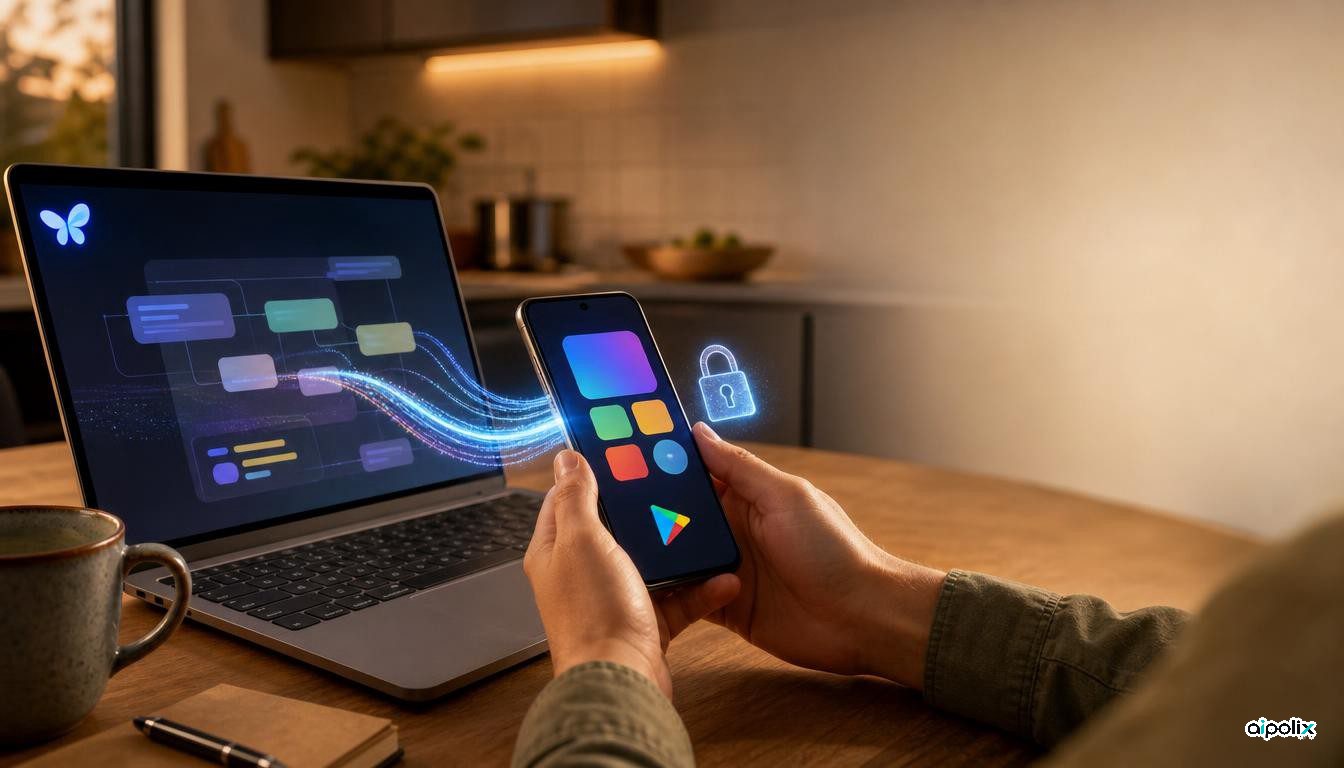
Google is turning its Play Store into a place to run apps that people build for themselves with AI. Starting October 13, 2026, someone who creates an Android app by prompting Google AI Studio can launch it on their own phone through Google Play, using an ordinary Google account rather than a paid developer account. The apps stay private: they do not appear in Play search or store listings and are visible only to the person who made them.
The feature is rolling out first in select markets, including the United States, and only to users aged 18 and over. Google says these personal apps are kept separate from the public catalog, and TechCrunch reports that they must still comply with existing Google Play policies.
The change removes a practical obstacle. Google first let people vibe-code personal Android apps in AI Studio in May, according to The Verge, but getting such an app onto a phone meant either tethering the device to a computer or publishing to the store, where it would be open to Play's roughly three billion users. TechCrunch notes that many hobbyists responded by building web apps instead of native Android ones.
Google has also outlined what comes next. In the coming months, creators will be able to share personal apps with a small circle of friends and family without making them public. If an app outgrows that circle, Google Play will let its maker move up to a professional developer account, at which point the app goes through the same Trust and Safety review and quality standards that apply to any published developer.
The personal-apps launch came with a wider set of AI features in Play. Ask Play, the store's built-in assistant, can now produce side-by-side comparisons of similar apps, highlighting key differences and what users say about them. A Play in Gemini integration will bring apps, games and developer content into Gemini conversations, with a rollout to all Gemini users described as coming soon. For games, a new Game Finder builds a profile Google calls Gamer DNA from how a person plays and what they say they like, and is launching in English for US users.
For Google, the move ties AI-assisted creation directly to Android distribution, positioning AI Studio as an entry point for people who would never have registered as developers. It also gives Google a controlled channel for software that has not been through store review, which explains the private-by-default design and the age limit.
Several details remain open. Google has not said which markets beyond the United States are included, how sharing permissions will work, or how personal apps will be checked for security problems before they are installed. The quality of AI-generated code, and who maintains it once a creator moves on, are questions the announcement does not address.