
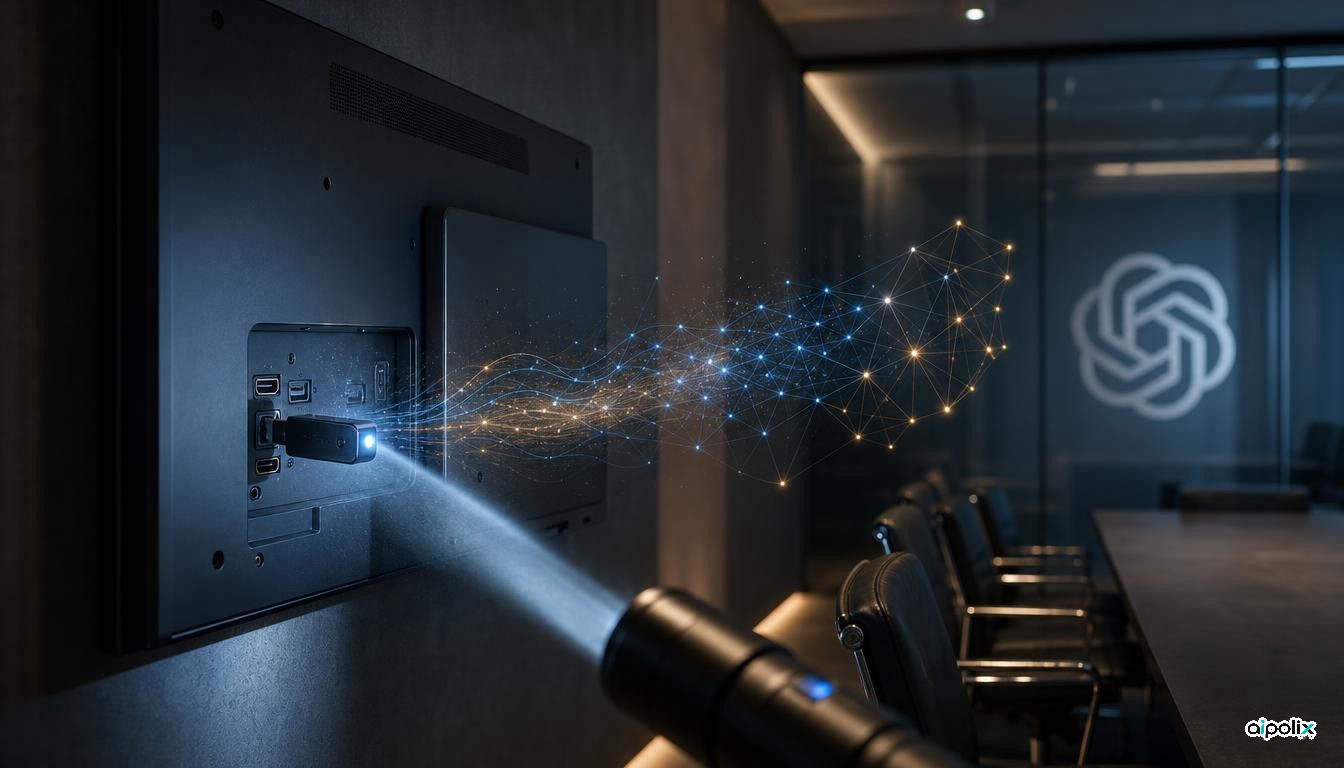
OpenAI disclosed on October 13, 2026 that it had found a sophisticated recording device hidden inside one of its offices, and that the employee it believes planted it has been arrested by the FBI. In a post from its OpenAI Newsroom account, the company said it used its own AI models to understand what the device was and where it had come from, which led investigators to a specific employee who had installed it a few days before it was discovered.
Federal prosecutors in San Francisco identified the man as Abdulrahman Alfozan, 35, a Saudi national who has worked as an engineer at OpenAI since July 2025. According to the criminal complaint, as reported by the San Francisco Standard, he was arrested on Friday, October 9, and charged with using or attempting to use a device to intercept oral communications. He made his first appearance in federal court on Tuesday and remains in custody, with a detention hearing set for October 19. If convicted, he faces up to five years in prison and a fine of up to $250,000.
The complaint says OpenAI staff found the device on September 30, plugged into a USB port behind a television in an executive conference room and concealed in toilet paper. The company concluded it had been installed around September 28 and that its contents were encrypted. Prosecutors say meetings in that room often involved confidential research, product plans and government engagements, and that surveillance footage showed Alfozan near the room on several dates even though he was not authorized to use it. On October 5, the complaint alleges, he entered the room and looked behind the television, and security staff later found a second, similar recorder in a bag he had left unattended alongside his wallet and ID.
Prosecutors also describe a trail of AI queries. Before the installation, Alfozan allegedly asked an internal productivity tool about building addresses, meeting rooms, calendars and the locations of leadership and partner meetings. A chatbot account tied to his spouse, which shared identifiers with his own, allegedly asked between September 24 and 30 how to build a continuous audio recorder, encrypt its SD card and access it remotely, and asked about the specific device later found, including its MAC address.
OpenAI said its technical surveillance countermeasures team found the recorder during a routine sweep. It described the device as built to evade detection, with strong encryption and a covert data-transfer mechanism, and said investigators used its models to analyze forensic images of the device's storage. The company said it gradually restricted the employee's access after the discovery, coordinated the timing of his dismissal with the FBI, and has evidence he intended to place more devices in sensitive spaces.
OpenAI said it has no indication that model weights, source code or customer data were accessed or taken, and no sign that the safety of its products was compromised. US Attorney Craig Missakian called the case a matter of national security, and FBI Director Kash Patel said protecting American AI innovation is among the bureau's top counterintelligence priorities. No motive has been made public, the allegations have not been tested in court, and the FBI says its investigation is continuing.
The case lands as US officials increasingly treat frontier AI labs as targets for espionage. It also gives OpenAI a pointed example of AI being used for physical security forensics, although the company's account of how its models helped has not been independently detailed.