
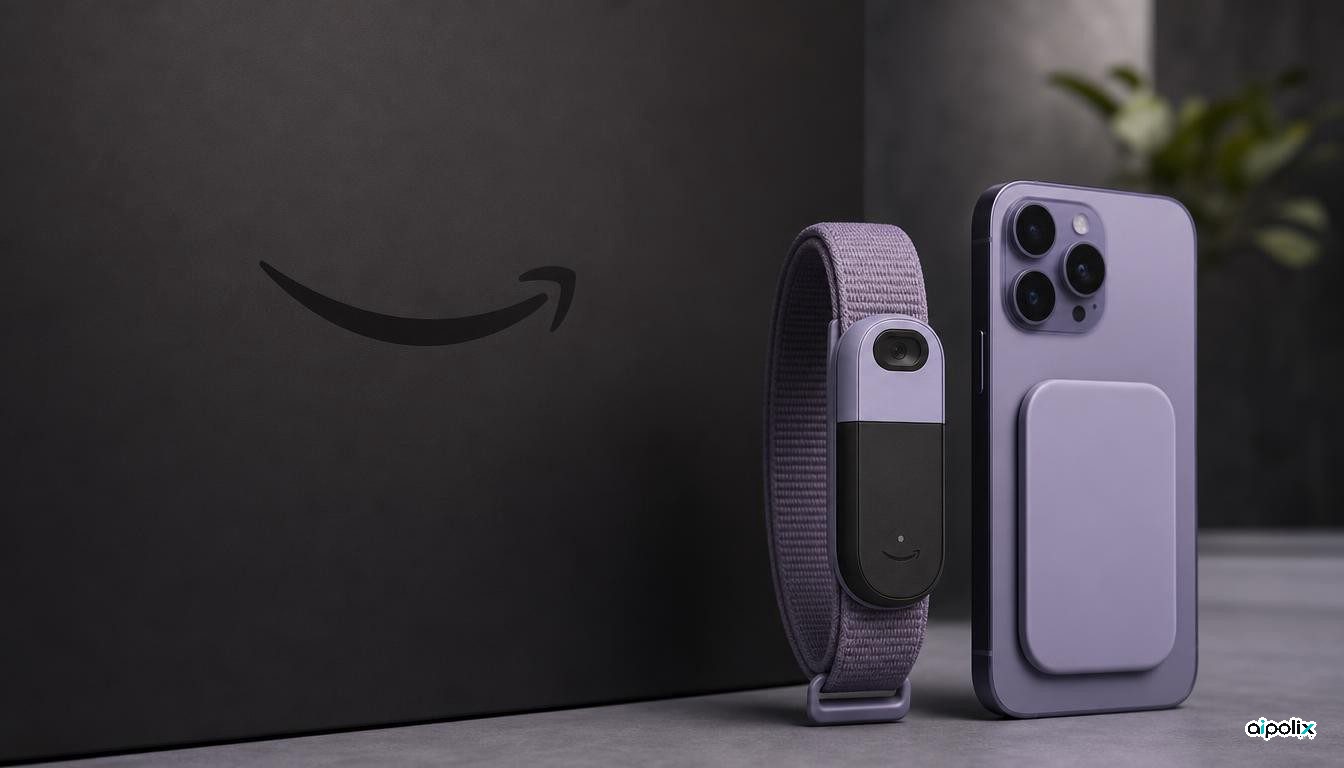
Amazon published a first-party announcement on October 15, 2026 introducing two new personal AI devices from Bee, the wearable maker it acquired the prior year. Bee Frontier is the next-generation wearable that can sit on a wristband or clip to clothing, priced at $74.99 and listed as available immediately on Amazon.com in Onyx, Lavender, and Sage. Bee Eclipse is a credit-card-sized magnetic phone attachment priced at $99.99 in Silver, Midnight, Honey, and Blush, described as arriving soon.
Both devices are positioned as ambient personal AI that turns conversations into summaries, insights, reminders, and to-dos rather than as pure transcription gadgets. Amazon says audio is processed in real time and then deleted under Bee Private Compute, with transcripts encrypted using keys the device creates and controls so Amazon employees cannot access the files unless the customer intentionally shares them. A single button and indicator light mark when the device is summarizing.
Frontier is rated IP67 with up to seven days of battery life, USB-C charging, and dual microphones with noise filtering. Eclipse is described as MagSafe-compatible with multi-week battery life in product materials. Customers can connect Bee to Gmail, Google Calendar, Microsoft Outlook, Apple HealthKit, and photos, and optionally to Alexa+ for hands-free summaries or to Amazon.com for shopping recommendations tied to spoken mentions.
A Bee Pro subscription at $11.99 per month unlocks unlimited conversation summaries plus deeper integrations, suggested to-dos, daily memories, a personal chat assistant, and conversation templates, according to TechCrunch coverage of the launch. Free use includes conversation summaries and a limited memory window.
TechCrunch, CNBC, and Reuters independently reported the same-day launch framing, pricing, and product split, corroborating the Amazon Staff post. Competitive framing in press compared Frontier pricing with Plaud Note and Pocket-style AI recorders. Optional Alexa Voice ID linking on Echo devices is presented as a convenience path for retrieving Bee insights hands-free, not as a mandatory always-on cloud mic.
Privacy remains the central product claim and the central open question for buyers. Amazon asserts no raw audio storage and customer-controlled encryption keys, while still offering cloud-connected Alexa and shopping features that require deliberate linking. Buyers evaluating workplace or clinical use should read the permission model carefully, including prompts described for call participants when recording starts on Eclipse.
The launch is Amazon first major Bee hardware refresh since the acquisition and expands the company ambient AI portfolio beyond Echo-centric form factors into wearable and phone-attached listening devices.