
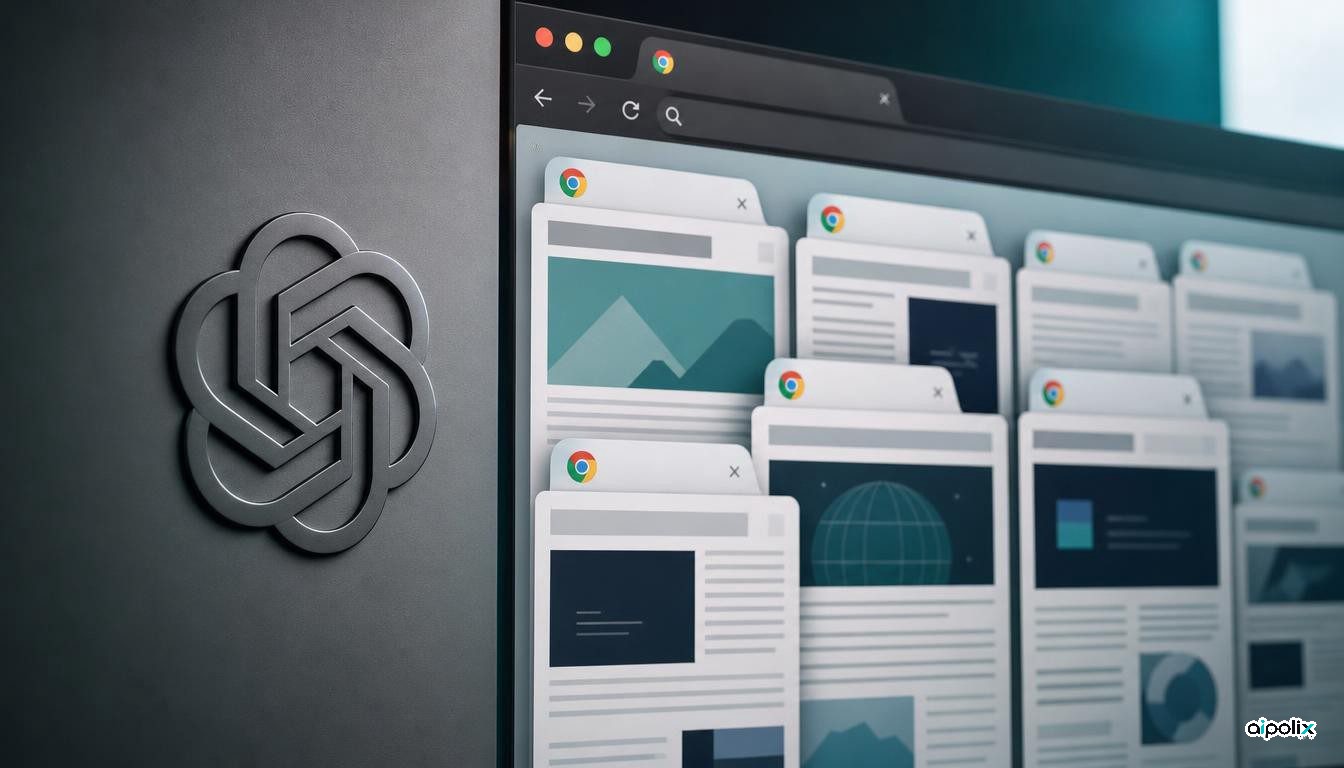
OpenAI expanded computer-use style capabilities inside Google Chrome on October 15, 2026 by upgrading the ChatGPT browser extension so the assistant can work with tabs users already have open. The Verge reported the change the same evening, citing OpenAI product messaging and a demo in which ChatGPT compared sofa listings across three open shopping tabs.
In Chat mode, ChatGPT can look across open tabs and pull details into answers when the user tags Chrome from the ChatGPT web or desktop app. Sample prompts listed in coverage include comparing contractor services across tabs, drafting an email to a preferred vendor, and filling a registration form from an event brief while stopping before submit.
In Work mode, the extension can control Chrome tabs to send messages, fill forms, download files, and organize or group open tabs. The Verge compared that control path to Google Gemini auto-browse style browser automation. ChatGPT in the Chrome sidebar also gained fuller conversation history access so users can stay on a page while using Chat or Work.
OpenAI frames the upgrade as bringing computer-use power to people who already live in Chrome rather than requiring a separate browser. The Chrome Web Store listing for the ChatGPT extension describes research across live sites, document work, data entry, tab cleanup, and permission prompts before browser-history access or file download and upload.
Independent coverage from Digit and Piunikaweb on October 15-16 repeated the Chat versus Work split and the tab-comparison demo language from OpenAI announcement channels. No separate OpenAI Newsroom long-form post appeared in the discovery window; authenticity rests on OpenAI product channels plus multi-outlet corroboration.
Privacy and control remain user-gated in the described design: the assistant asks permission for history references and file transfers, and Work-mode actions run as browser tasks the user initiates rather than a silent takeover of the active session. Builders should treat capability claims as product messaging until they validate behavior on their own accounts and Chrome profiles.
The release lands amid broader competition over in-browser agents. It also follows OpenAI earlier Atlas browser experiment, which The Verge noted as discontinued as Chrome-extension automation took center stage for everyday users.
For enterprise and builder audiences, the practical question is whether Work-mode control is reliable on authenticated SaaS, e-commerce checkouts, and internal tools that block automation. Coverage does not publish a formal allowlist; the Chrome Web Store language emphasizes permission prompts and user-initiated tasks. Teams should pilot on non-production profiles, watch for anti-bot friction, and document which sites accept agent-driven form fills before rolling the feature into customer workflows.