
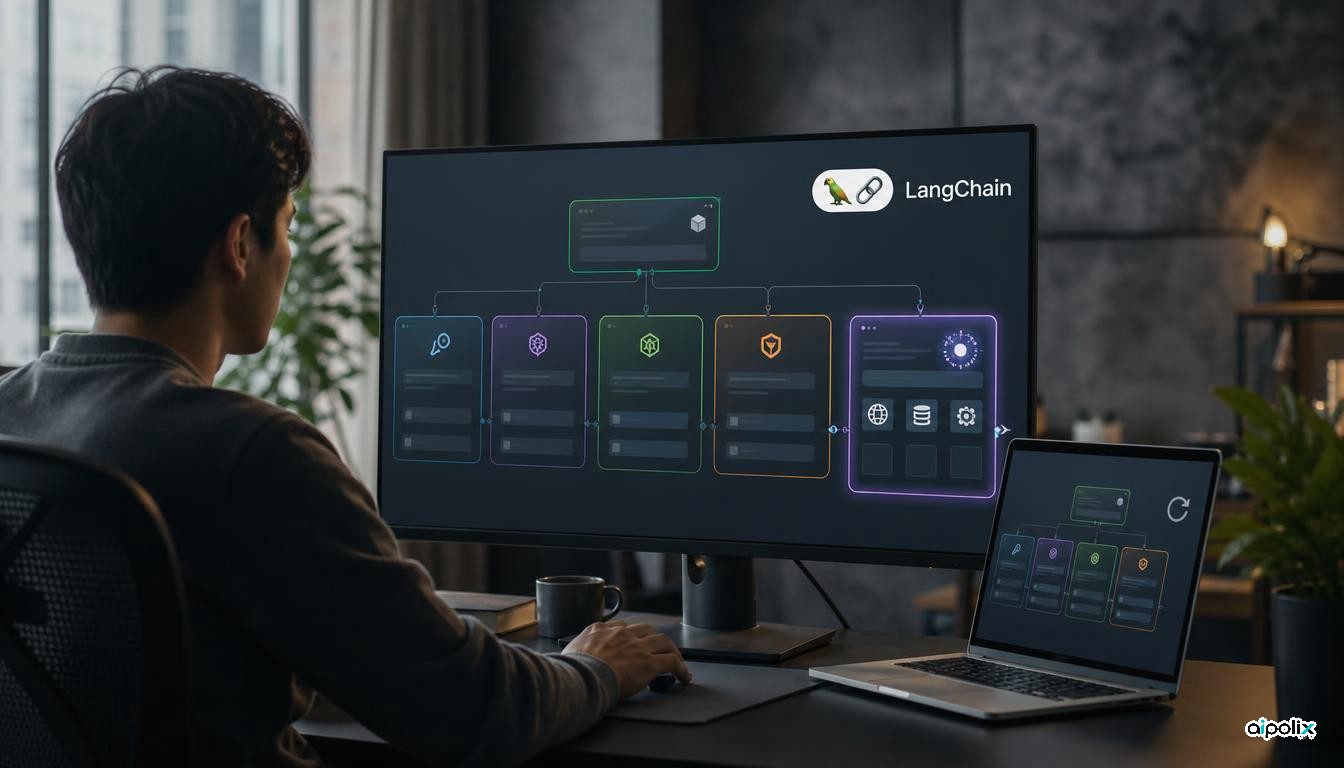
LangChain published a Deep Agents skills update on October 7 that changes how agent instructions and tools enter a model's working context. The release introduces three capabilities: binding tools to a skill, pinning a requested skill before the next model call, and refreshing a skill library during an existing conversation. All three are available in the latest deepagents package, according to LangChain.
Skills are folders containing a SKILL.md instruction file and optional scripts, references and assets. Instead of loading every instruction and resource at startup, an agent normally sees each skill's name and description and reads the full instructions only when needed. This progressive-disclosure approach reduces context usage, but previously left a gap: tools and the skills explaining how to use them could be discovered separately. An agent might invoke a tool without first reading its operational instructions.
Tool binding addresses that mismatch. A developer lists tool names or groups in a skill's metadata.include_tools setting and passes the relevant tools to SkillsMiddleware. A bound tool is not available to the agent until the associated skill has been read. LangChain says models supporting mid-conversation tool addition can receive these tools without changing the cached prompt prefix; other models still require the ordinary request-tool update. Developers can also resolve groups dynamically and apply runtime permission checks before exposing sensitive tools.
Pinned skills solve a different problem. If an application already knows which skill the user requested, it can pass that skill through the pinned_skills runtime input. The middleware places its instructions in context before the next model call rather than waiting for the agent to discover and read them. LangChain's example uses a meeting-preparation skill. The application, not the Deep Agents library, is responsible for parsing user commands or selecting the skill. This can remove an extra tool round trip and makes instruction loading more predictable.
Long-running threads can now refresh their skill list without starting a new conversation. Setting skills_metadata to None triggers a rescan of skill sources, so additions, edits and removals can be reflected on the next run. Reloading can invalidate the prompt cache if the system prompt changes, a cost that developers need to consider. LangChain notes that many idle conversations will already have cold provider caches when a reload happens.
The update is significant for teams operating large skill registries, where loading every tool schema and instruction eagerly becomes costly and difficult to govern. It is a change to agent architecture rather than a new foundation model. The company supplies implementation details and documentation, but has not published an independent benchmark showing measured improvements in accuracy, latency or cost across diverse workloads. Developers still need to test permissions, cache behavior and instruction quality in their own systems.