
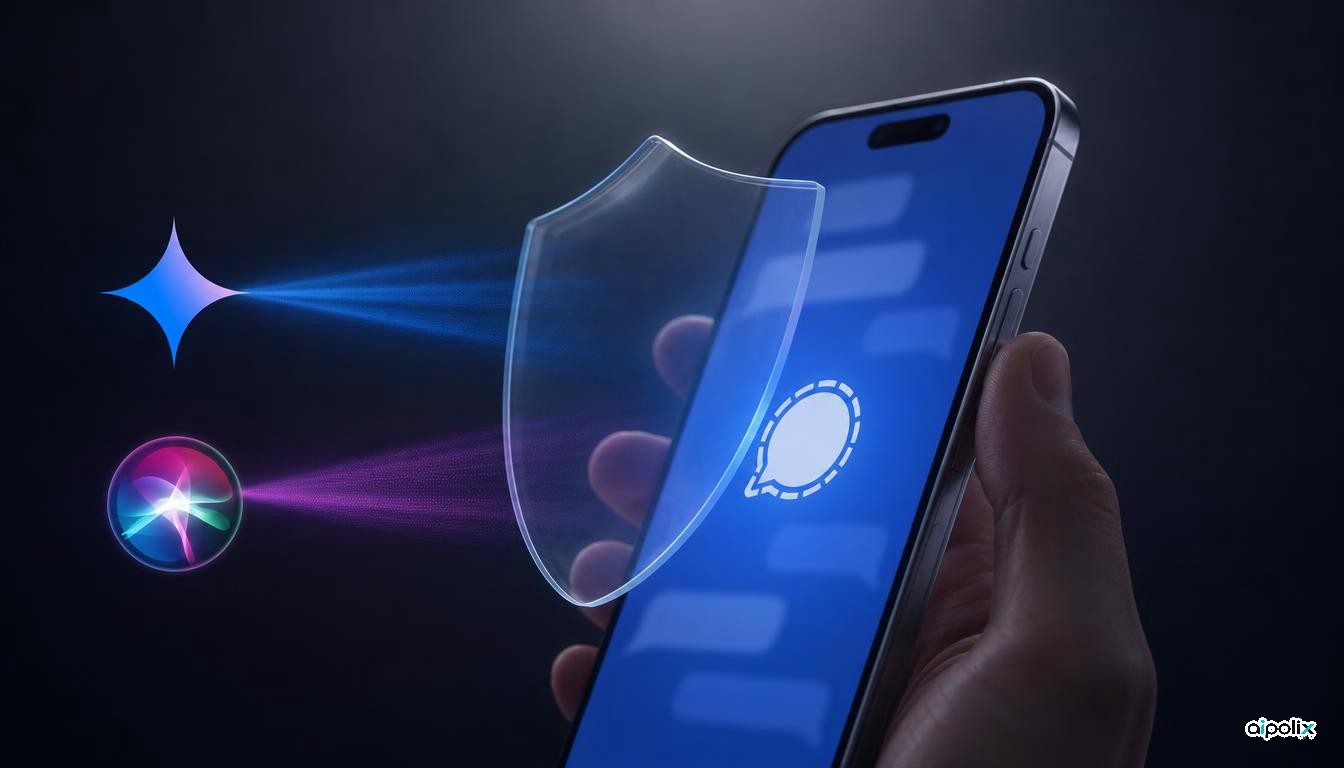
Signal said on November 20, 2026 that it is restricting screen capture inside its app on iOS 27 and, on Android, wherever it can detect an AI assistant trying to read the screen. In a blog post, Signal Foundation president Meredith Whittaker called the way operating systems now embed AI agents "an existential threat" to Signal's ability to protect privacy. The aim is to stop assistants such as Siri AI and Gemini from capturing message content and handing it to systems Signal does not control.
The company's reasoning is that these agents work by scanning whatever is on screen so they can answer questions and carry out requests. In doing so, Signal says, private messages are captured, stored and made available to a local database or remote server, which undermines the guarantees it has built on an open-source codebase and a formally verified encryption protocol. Whittaker says the exposure affects everyone in a conversation, not just the person who owns the phone.
The implementation differs by platform. On iOS, according to The Next Web, a new setting called Block Siri AI is on by default and also stops screenshots in the app and the app switcher. On Android, Signal turns on its existing Screen security setting automatically when it detects an assistant reading the screen, because on many vendors' devices it cannot reliably tell when a screenshot was attempted. Users can switch the protection off, but Signal warns that doing so may expose their own and their contacts' messages. Signal did a similar thing last year for Microsoft Recall on Windows 11.
Signal is open about the limits. It calls the fix incomplete, since blocking screenshots does not stop an agent from reaching content already on the device through the filesystem, and The Verge reports that Signal cannot yet offer the protection on macOS. The Verge also says Signal wants more control over third-party agents, such as Meta's Muse, which it describes as using deep accessibility settings like a skeleton key into apps. CyberScoop adds that the announcement follows reports that Muse was able to read Signal messages.
Rather than settle for workarounds, Signal is asking Apple, Google and Microsoft for simple technical tools and accurate documentation so developers can prevent agents from reaching sensitive application data, including a clear way to opt out of AI data access and processing. Whittaker argues that operating system vendors are integrating agents recklessly, without giving apps good ways to refuse. CyberScoop reported that Apple, Google and Microsoft had not immediately responded to requests for comment.
The announcement matters beyond one messaging app. It puts a concrete case on the table in a debate about who controls access to on-screen data once assistants become part of the operating system. Whether platform owners add developer controls, or whether apps respond with blunt measures like blocking screenshots, will shape how agentic features and privacy-focused software coexist. The statements about risk come from Signal and the reporters relaying them, and no vendor has yet given its side.