
LangChain has shipped version 0.10 of Managed Deep Agents, its hosted service for building and running agents on LangSmith without managing infrastructure. Released in public beta on October 29, the update gives agents two capabilities developers have been asking for: a real web browser they can operate, and subagents that can work in the background without freezing the conversation.
The browser targets the many everyday tasks, such as booking travel, cancelling a subscription or filing a claim, that live on websites with no API. LangChain argues that simply downloading a page is not enough, because the raw HTML arrives before scripts render the content and nothing can be clicked. In v0.10 a developer declares a browser in the project with a single define_browser call, and the platform runs it remotely in its own LangSmith sandbox and adds tools automatically: browser_snapshot parses the accessibility tree and tags interactive elements, browser_run performs batches of actions or Playwright-style scripts, browser_screenshot captures the page, and browser_handoff passes control to a person.
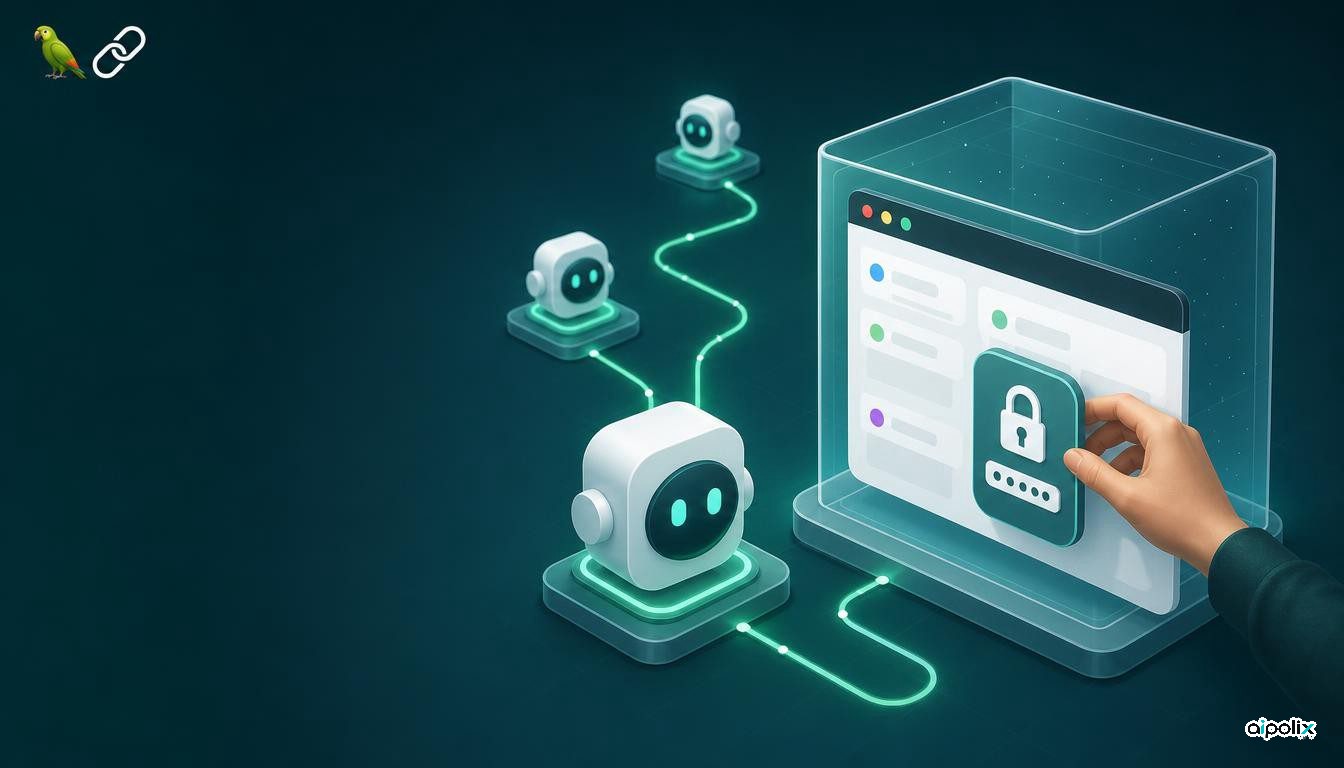
That handoff is the security centrepiece. When an agent hits a login screen or a two-factor prompt, it asks the user to take over the window, in LangSmith Studio or in Slack, and the user signs in personally before clicking Hand back. The credentials therefore never appear in the model's messages, traces or provider logs. Browsers can be scoped to a single thread, starting clean each time, or to a user, so a login persists across that person's conversations. Idle browsers shut down after ten minutes by default.
LangChain built the tools on Stagehand, the open source SDK from Browserbase, and reports that on 100 WebVoyager tasks they succeeded 90% of the time for $1.98 in total, the best of seven toolsets it compared. Because the browser has a private bridge to the agent's own sandbox, a coding agent can also launch an app locally and click through it for end-to-end testing, then save the steps as a reusable Playwright test.
The second headline feature is asynchronous subagents. Until now, delegated subagents ran inline and the user had to wait. Marking a subagent async lets it run on its own thread while the orchestrator keeps chatting; the main agent can check on, redirect or cancel the job, and the result is pushed back automatically rather than polled. Other changes include replies that return to the originating Slack thread, a Stop button, experimental Slack event handlers, a resolveUser hook for identity mapping, and breaking changes that move MCP server declarations into tools files.
The figures on benchmark accuracy and cost come from LangChain itself and have not been independently reproduced. LangChain says a deeper write-up of how it tested the browser tools will follow.