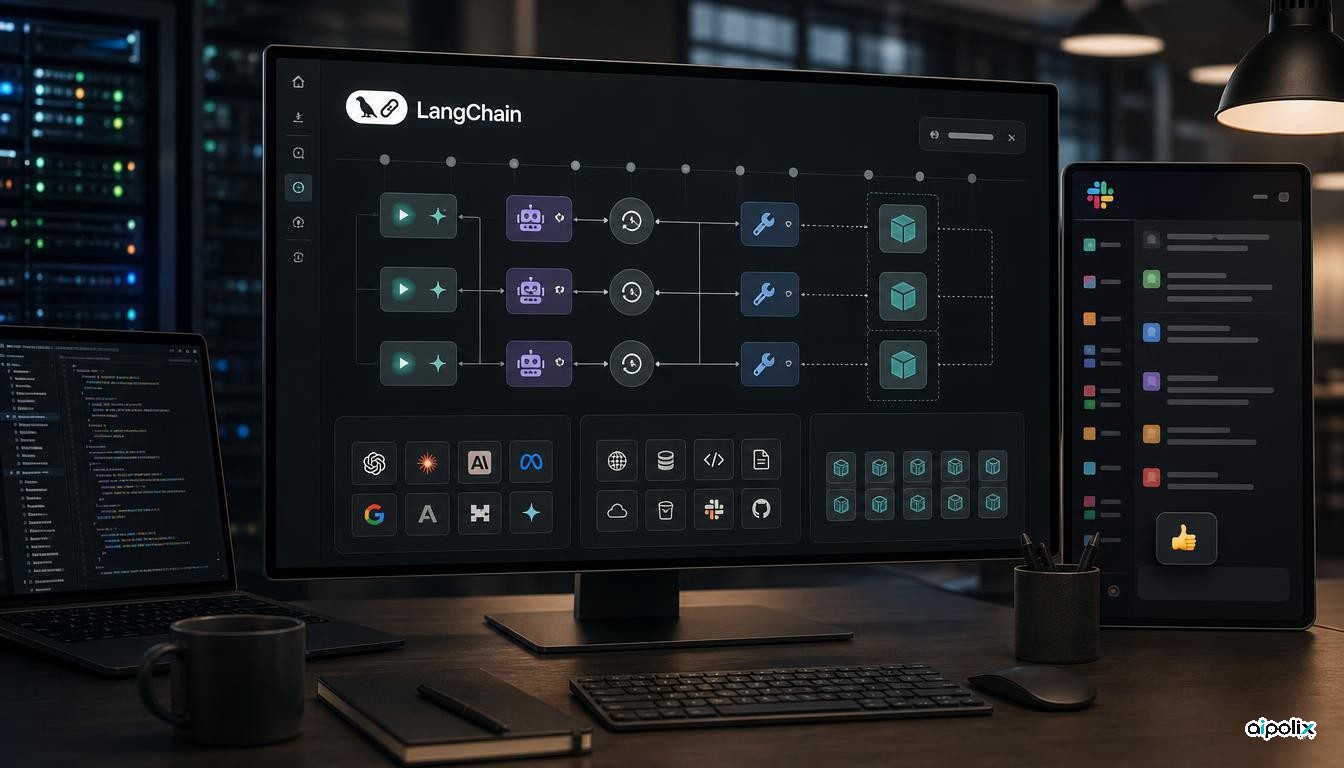
LangChain has released Managed Deep Agents v0.9 in public beta, adding built-in scheduling, per-run configuration and faster feedback inside Slack. The update is aimed at agents that remain available over time rather than only executing a single request. With the new scheduling capability, an agent can create reminders, follow-up jobs or recurring tasks and have those jobs launch fresh runs automatically when their schedules fire.
The scheduling design is notable because it stays connected to the environment in which the agent was created. LangChain says scheduled jobs inherit the relevant channel and user permissions, and each execution starts a new LangSmith run before the result is posted back to the originating context. That provides a clearer operational trail than treating scheduled work as an invisible background process, and it gives teams a way to inspect individual executions independently.
Version 0.9 also introduces per-run configuration. Before a run starts, users can choose or adjust the model, instructions, skills, MCP servers and sandbox settings used for that execution. This makes the managed agent less rigid: the same persistent agent can be tuned for a particular task without requiring a separate deployment for every variation. It also creates a more explicit boundary between persistent agent identity and the runtime configuration selected for a specific job.
For Slack users, Managed Deep Agents can now react to a message when work has been received. LangChain uses a looking-eyes reaction as the default acknowledgement and allows that behavior to be configured. The feature is small compared with scheduling, but it addresses a practical problem in chat-based agent workflows: users need immediate feedback that a request was captured even when the substantive result takes longer to arrive.
Taken together, the changes move Managed Deep Agents closer to an operational agent service rather than a one-shot assistant wrapper. Scheduling supports unattended recurring work, per-run controls give operators a way to vary execution context, and message acknowledgements make the human-agent interaction more legible. For teams adopting agents in production, those details can matter as much as raw model capability because they shape permissions, observability and how reliably work is handed off.
The release remains a public beta, so the main caveat is maturity. LangChain's announcement establishes the feature set and intended behavior, but it does not by itself demonstrate reliability under high-volume or long-running production workloads. Teams evaluating v0.9 should therefore separate the availability of these controls from evidence about operational robustness. The update is still meaningful: it fills several workflow gaps that appear once an agent is expected to remain active, repeat work and participate in team communication over time.