
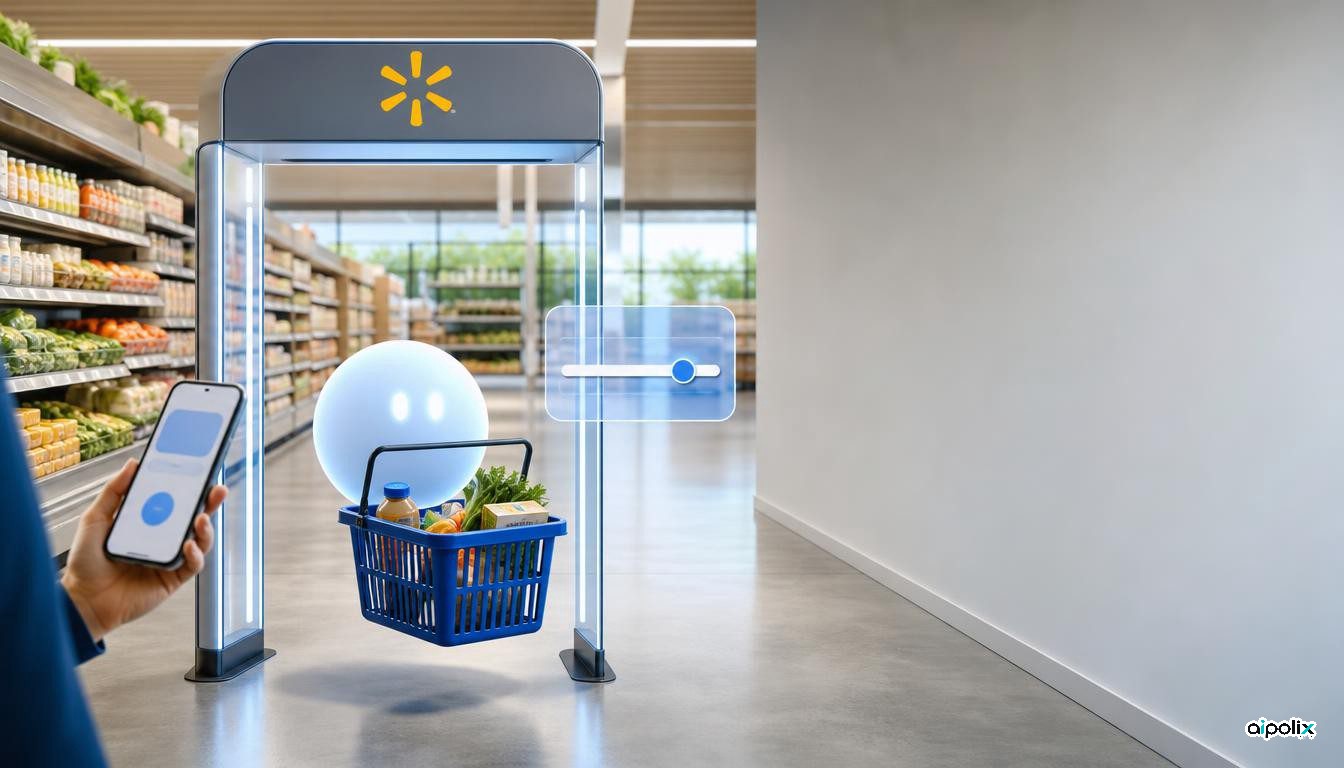
Walmart is betting that AI agents will become a normal way to shop, and it wants them to come through a door it controls. On October 21, 2026 the retailer announced three pieces that work together: the Walmart Agent Gateway, Agent Profiles and a set of terms for AI agents. The tools cover both Walmart and its Sam's Club warehouse chain. CEO John Furner presented the plan on stage at San Francisco's Masters of Scale Summit, TechCrunch reported.
The gateway addresses how agents reach the store today. Walmart notes that agents currently shop by driving a web browser through pages built for people, which it calls slow and error-prone. The Agent Gateway instead exposes Walmart's catalog and checkout to approved agents over the Model Context Protocol, the open standard first created by Anthropic for connecting AI systems to tools and data. Walmart says it will start with a beta for companies and developers. The retailer also says the gateway can help an agent find a shopper's usual items, giving the example of a preferred sourdough or milk brand, without handing the agent the customer's wider purchase history.
Agent Profiles, due within the next month, change how agent purchases show up. Today an agent signs in with the customer's own credentials, so its orders are indistinguishable from the person's. Under the new setup, each agent gets a dedicated profile inside the customer's account, created the first time it shops through the gateway and linked when the customer signs in. Shoppers can require approval for every purchase or allow buying within a cap, with Walmart citing $50, $100 or $200 as examples, review each agent's orders separately, and delete a profile at any time. Walmart compares the arrangement to adding an authorized cardholder with a limit. A Walmart+ membership is not required, according to TechCrunch.
The terms set the rules of the road. Agents may not act beyond what the shopper intends, do not receive payment-card details and cannot add or change payment methods, and may access only the information a task needs. Approval is required by default, and Walmart may ask for extra confirmation even within a spending limit. Its returns policy applies when an agent misbehaves, and agents that break the terms will be blocked. Walmart also says agents see the same prices as human shoppers on Walmart.com.
The move stands out against Amazon. Both TechCrunch and The Verge describe Amazon as blocking AI agents from buying on behalf of shoppers, with The Verge naming Perplexity's shopping agent and Meta's Muse assistant among those shut out. Walmart already has conversational shopping tie-ins with Muse, ChatGPT and Gemini, and the gateway formalizes that open stance with infrastructure and contractual limits rather than ad hoc browser access.
For agent developers, a large retailer publishing an MCP endpoint and explicit agent rules is a meaningful signal that agentic commerce is moving from scraping and screen automation to sanctioned interfaces. For shoppers, the per-agent ledger and caps address a basic worry about letting software spend money.
Key details remain open. Walmart has not said which agents will be approved for the gateway, when the beta will widen, or how it will detect and block agents that break its terms. Agent Profiles are announced rather than live, and the privacy split, in which the agent company's policy governs what users share with it, leaves part of the data question with third parties.