
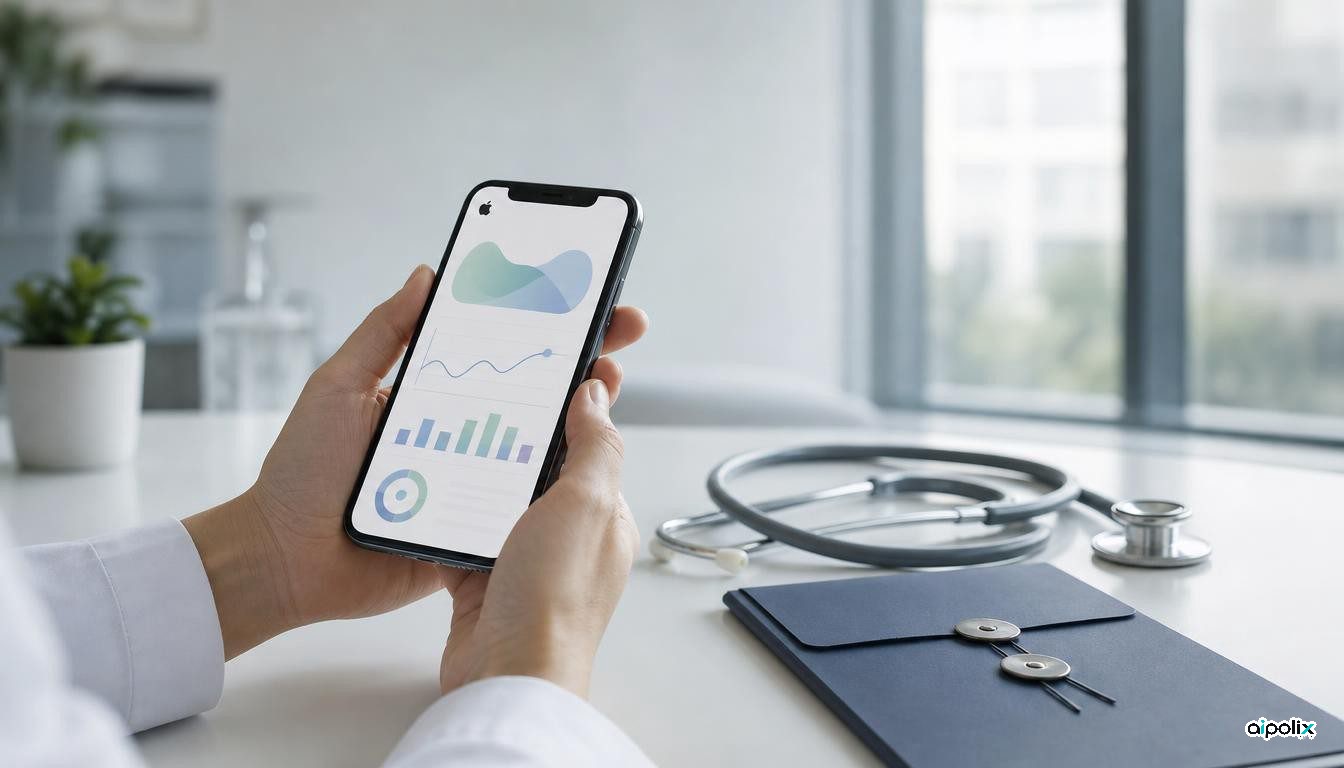
Apple announced the Apple Health AI Usage Study on November 15, 2026, a virtual research study in the United States built around a new iPhone app. The company is running the study with OpenEvidence, a clinical AI platform used by healthcare professionals. Apple says the work is meant to inform how health AI tools should be designed, by looking at what drives user trust, the quality of answers, how well people understand those answers, and what people do with the information in daily life.
The study pairs medically grounded AI technology developed by OpenEvidence with a research experience designed by Apple. OpenEvidence generates answers using medical information from established sources such as The New England Journal of Medicine, the Journal of the American Medical Association, and Nature. Participants can ask everyday health questions in the study app, read complex medical information in approachable language, and see linked, peer-reviewed clinical citations that ground each response. Reports by Ivan Mehta at TechCrunch and Andrew Liszewski at The Verge both said participants can also rate the answers. Apple's Newsroom post emphasizes the study's research aims and does not describe a rating interface in the same detail.
Participants may choose to share HealthKit data types, including resting heart rate, activity, sleep, or lab results, so the study can examine how personal health data changes the relevance and clarity of responses. Apple also says the study will explore whether health AI can help people prepare for visits with their own doctors. The app is not meant to diagnose or treat any condition, or to replace the advice of medical professionals. A footnote in the Newsroom post tells participants to consult a doctor or clinician about health concerns or to verify medical information.
"At Apple, we believe responsible innovation starts with scientific rigor and clinical grounding," said Sumbul Desai, M.D., Apple's vice president of Health and Fitness. "Health is deeply personal, and conducting a dedicated research study is the most thoughtful way to understand how people engage with, comprehend, and evaluate health AI in everyday life." Robert M. Wachter, M.D., professor and chair of the Department of Medicine at the University of California, San Francisco, said patients and clinicians are both turning to AI, but that the tools they use are being "built and tested in separate worlds." In his view, connecting trustworthy tools and studying what works is how those experiences can come together.
Apple says the study was designed with privacy protections, transparency, and clinical guardrails, and that study data will not be used to train AI models. Participants keep control over whether to share any HealthKit metrics or survey responses. The company says it has implemented security measures to protect the study data it maintains and the confidentiality of participants' information. The app includes safety guardrails intended to detect certain concerning questions and to suggest that a participant follow up with a provider or other resources if needed. The study is open to as many as 200,000 eligible people age 21 and older across the United States. To join, a participant must have an Apple Intelligence-enabled iPhone (iPhone 15 Pro or later) running iOS 26 or later. Apple says people can download the study app to learn more and choose to enroll.
The announcement does not say when results will be published, how long enrollment will remain open, or whether Apple plans to add similar conversational features to the Health app or Siri. Independent coverage by TechCrunch and The Verge confirms the launch, the OpenEvidence collaboration, the broad eligibility rules, and the promise that study data will not be used to train models. Some details in the press accounts do not appear in Apple's Newsroom post, including TechCrunch's report that the study is intended to run for more than 12 months and that OpenEvidence deletes query and response data after 24 hours. Those points are attributed to TechCrunch. Eligibility should be read from Apple's wording: an Apple Intelligence-enabled iPhone 15 Pro or later, which is more specific than one press account that referred to iPhone 15 or later.