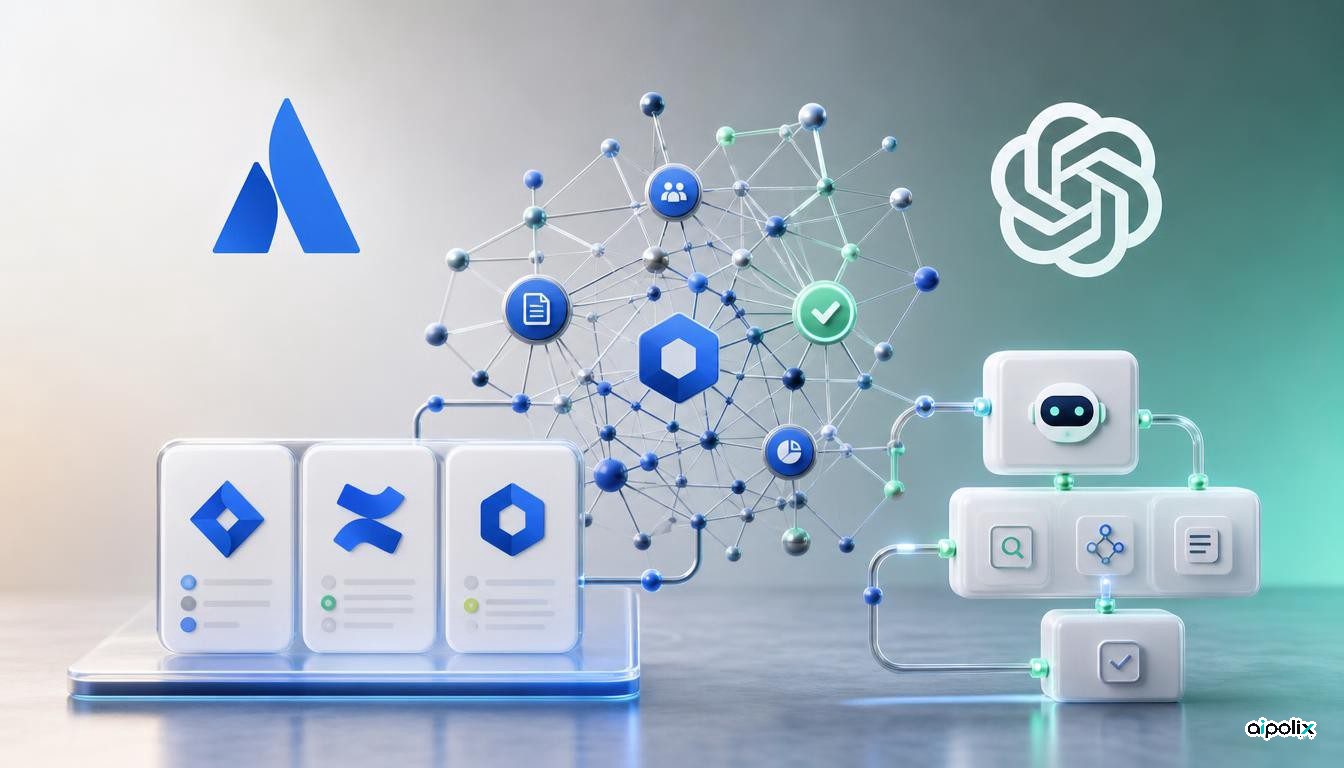
Atlassian and OpenAI have expanded their partnership around enterprise AI, combining OpenAI frontier models with Atlassian's products, Rovo agent platform and Teamwork Graph. The agreement is designed to let AI systems work with organizational context drawn from tools such as Jira and Confluence rather than operating only on information supplied in an isolated prompt.
Under the expanded arrangement, OpenAI models in the GPT-6 family will power agent experiences across Atlassian's platform and Rovo. Atlassian's Teamwork Graph connects people, projects, documents and decisions, giving the models a structured context layer for answering questions and taking actions. The companies also describe deeper links between Atlassian data and ChatGPT or Codex through plugins and command-line integrations, subject to the permissions available to each user.
The partnership is also notable for Atlassian's internal adoption of OpenAI products. OpenAI says more than 3,000 Atlassian developers use Codex across terminals, development environments and code-review workflows. Atlassian, meanwhile, receives expanded access to OpenAI frontier models including GPT-6 Astra and the GPT-5.6 family. The companies say they are exploring deeper Jira integrations that could let teams assign work to AI agents, monitor progress, capture decisions and review results.
The central development is a business and platform partnership rather than a new standalone model. It reflects a broader enterprise pattern in which model providers need access to governed organizational context, while software platforms want stronger reasoning and agent capabilities without building every frontier model themselves. Atlassian's graph-based context layer is therefore strategically important: it can determine what information an agent sees and how that information relates to projects, people and work items.
The announcement is first-party and establishes the agreement and planned integrations, but this run did not find a credible independent source adding material confirmation or deployment evidence. Claims about productivity benefits and the future impact of deeper agent integration should therefore be treated as expectations rather than demonstrated outcomes. The practical test will be whether the combined system can act reliably across enterprise workflows while respecting permissions, maintaining traceability and giving teams meaningful control over automated work.