
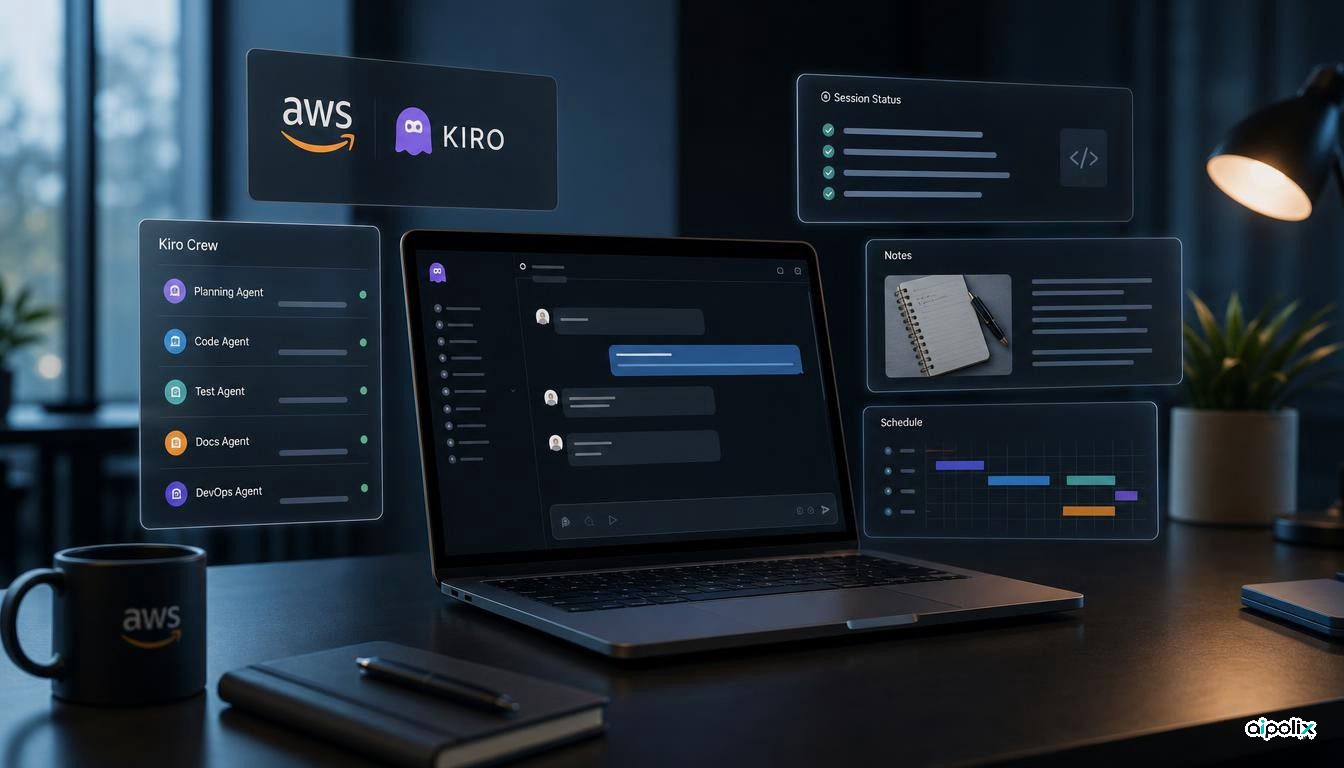
AWS on November 5, 2026 said Kiro bots are generally available inside Kiro Crew, its multi-agent development environment. The first-party post on kiro.dev frames bots as named, long-running agents that own a slice of a developer's workflow instead of living only inside disposable chat sessions. InfoWorld independently covered the same launch, describing bots as a way to coordinate parallel coding tasks, keep context across sessions and automate recurring software work.
Each bot gets a name, avatar and one ongoing chat where the developer sets direction and returns for results. AWS says a bot can start worker sessions in parallel, watch for drift, ask for a decision when needed, and keep moving on independent branches. Memory lives in Notes that capture preferences, prior decisions, requirements and constraints for that bot's specialty, separate from what other bots learn.
Developers can schedule recurring jobs in the chat, such as checking CI failures every weekday morning or drafting Friday release notes. Tool access is scoped: a research bot may search and read files without write permission, while a deployment bot can run scripts but still asks for approval before changes. Bots can request more tools, yet nothing expands until the user approves.
InfoWorld adds product detail on setup: open Customize in Kiro Crew, choose Add a bot, and base it on a default or existing custom agent, then assign responsibilities such as issue triage, build monitoring or release readiness. Dashboards let developers describe how they want to visualize a bot's ongoing activity. VentureBeat's listing the same day also emphasized memory and recurring development jobs.
AWS presents bots as an answer to the coordination tax of running many agents at once: less babysitting of individual sessions, more oversight of whole processes. Productivity claims and the exact maturity of Notes editing are AWS's. The launch sits squarely in Reza's agents and coding-tools focus area because it packages persistent agents, memory and scheduled automation inside a developer IDE workflow.
Verification treats the Kiro blog as the source of record (direct first-party path) with InfoWorld as independent confirmation. The VentureBeat article URL was rate-limited to curl in this run, so it is cited only as a discovery lead, not as a fetched corroborating body.