
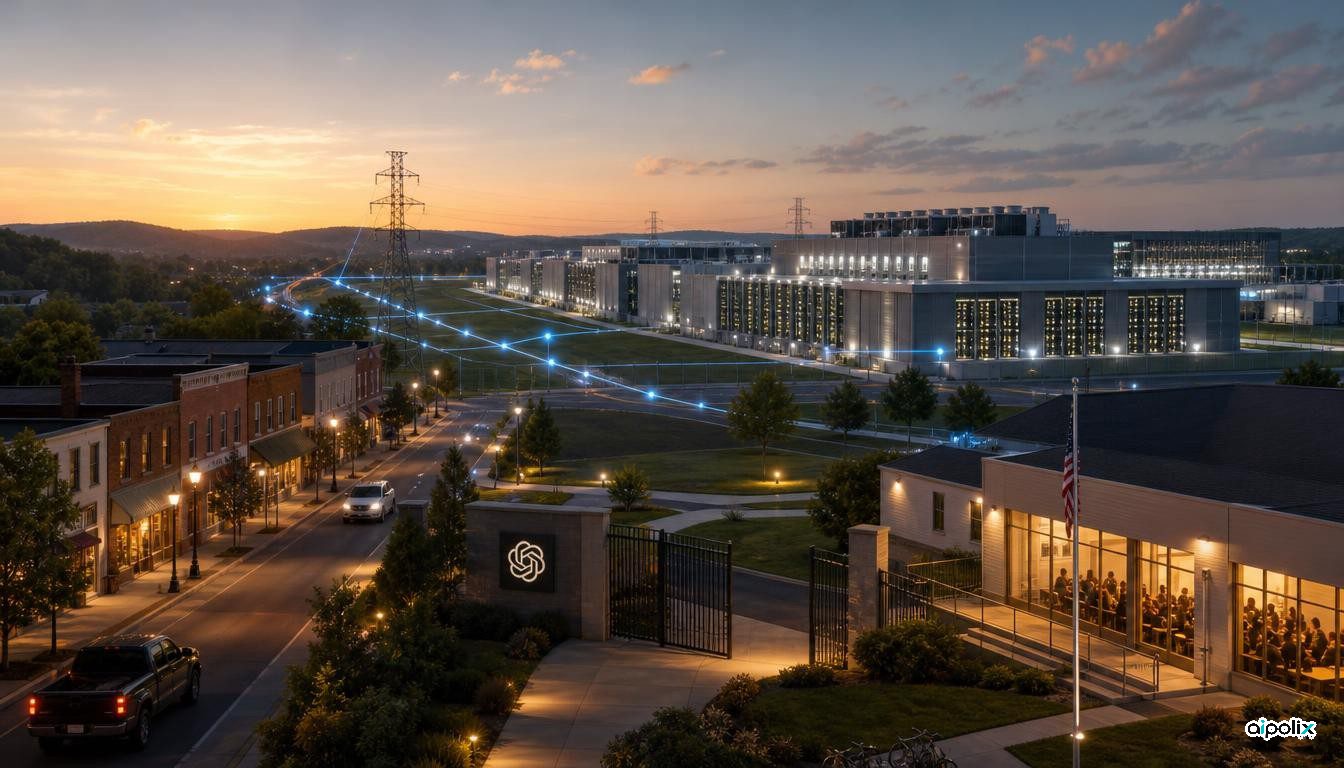
OpenAI is trying to turn its data-center buildout into a public policy package as well as a set of company promises. On November 5, 2026 the company published a post titled Setting a new standard for responsible AI infrastructure, announcing a National Community Compact for campuses it owns and operates and a Compute Campus Policy Blueprint aimed at federal, state and local policymakers.
The compact is the company-side commitment. OpenAI says every future campus it owns and operates will have a local compact shaped by early resident engagement, a local point of contact for the life of the site, and public annual reporting. Common commitments listed in the post include paying the full cost of electricity and related infrastructure with financial assurances before major spending begins; publishing water and electricity use, construction plans and independent noise studies; refusing broad NDAs with public officials except for narrow security and trade-secret carve-outs; and publishing expected jobs while working with unions and training providers on hiring and apprenticeships. Local priorities can differ: OpenAI cites a $4.8 million grant for free school meals for all 14,000 students in Effingham County, Georgia, and a joint $6 million childcare commitment with SB Energy in Pike County, Ohio.
The blueprint is the policy ask. OpenAI argues voluntary corporate promises are not enough and that families need rules whoever builds a campus. It calls on state utility commissions to make large electricity customers cover the costs they add to the grid and to protect other ratepayers if a project is delayed, reduced or cancelled. It highlights a planned Effingham County agreement with Georgia Power that would let the utility cut power delivered to OpenAI by up to 1,000 megawatts during high demand. Congress, in OpenAI's framing, should speed transmission upgrades and restore or expand clean-electricity tax incentives. The blueprint also asks for public reporting on water, energy, noise and hiring; narrow limits on NDAs with public officials; and public, measurable tax-incentive terms with clawbacks if developers miss commitments. Developers should share purchasing plans early enough for local suppliers to compete, and employers should use hiring forecasts with building-trades unions and community colleges.
The announcement builds on OpenAI's January Stargate Community commitments to pay its own way on energy and to shape plans around local priorities, followed by Georgia and Ohio site-specific pledges. It sits next to the company's earlier Grid Protectors Program, which focused on demand response during grid stress, but this post is about community voice, cost allocation and accountability rather than emergency load shedding alone.
Nothing in the package creates binding law. The compact applies to campuses OpenAI owns and operates, not necessarily to every facility that serves OpenAI through partners. Dollar figures for Georgia and Ohio are OpenAI's own examples. Independent coverage of the November 5 package was not required for authenticity under direct=1, and this run treats the claims as OpenAI's stated commitments and policy proposals rather than enacted regulation.