OpenAI on November 19, 2026 described the Performance Factory, an autonomous system in which Codex agents find, diagnose and help fix performance regressions in ChatGPT and its services. The write-up was authored by Okay Zed and Cyrus Forbes, Members of Technical Staff, and it presents the system as a response to a pace of agentic development that makes manual performance engineering unsustainable.
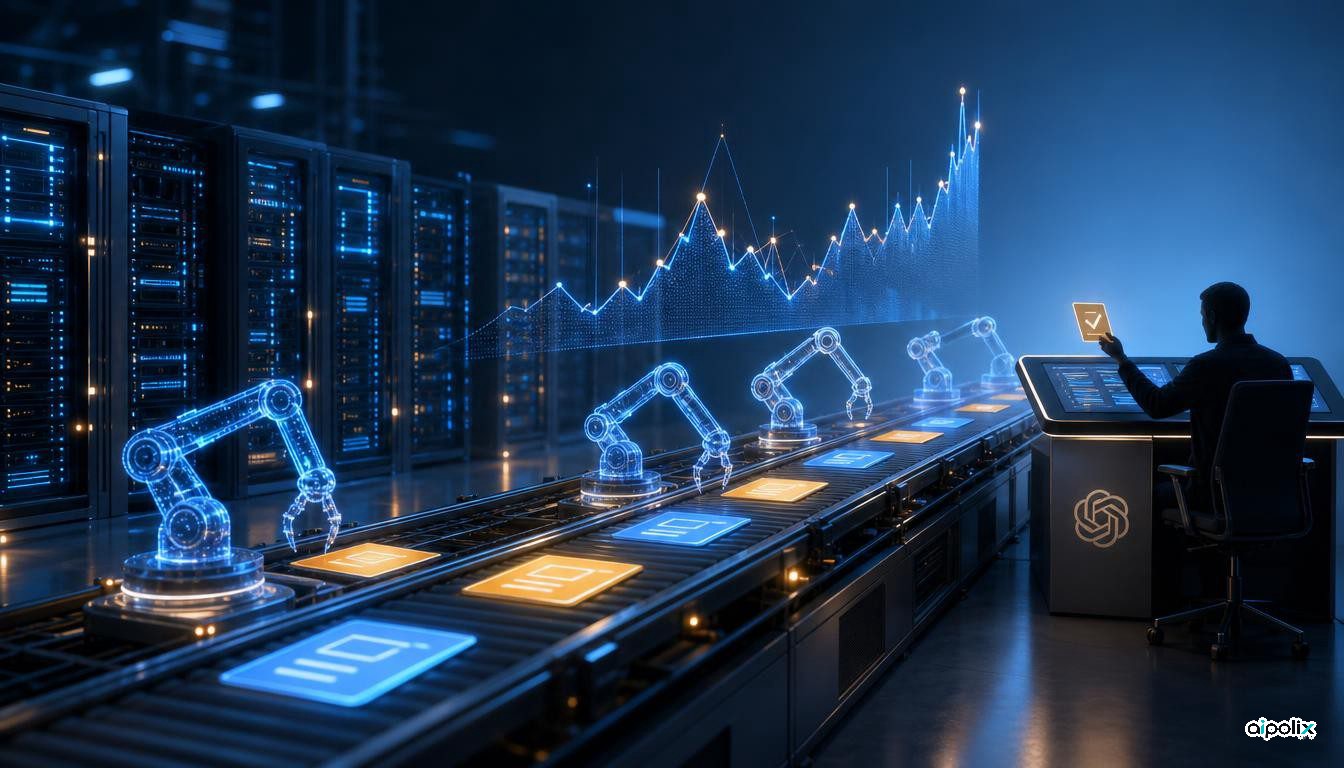
The central figure is volume. OpenAI says the first workflow, called the Regression Workflow, tracked more than 1,700 investigations and root-caused over 600 cases in just over three months, which the authors put at about 17 automated investigations a day. The workflow opens a task when a performance alert fires, an agent investigates the slowdown and records findings, proposes a fix for an engineer to review, and after deployment another agent checks whether performance has returned to baseline.
The post traces how the team got there. Engineers first investigated by hand and accumulated more than 30 performance tools. They then used Codex as a partner, captured their method in a shared skill called perf-forensics, moved investigations to the cloud so alerts could start sessions automatically, and finally built the factory to run workflows end to end. The system has four parts: a task service with configurable workflows written as configuration files and Markdown prompts, a dispatch loop that assigns ready work to agents, an internal API that runs Codex in the cloud under a scoped service identity, and subscriptions that wake agents when events such as pull request comments or finished deployments occur.
Accuracy is handled with checks and balances. Early agents sometimes stopped at the first plausible cause, so OpenAI added an adversarial review in which a separate Codex session tries to disprove the diagnosis. In one example, a reviewer reopened an investigation because the file-location service had already recovered while image requests were still failing. In a manual review of 100 root-cause suggestions, 70% were graded accurate and 30% needed more work. Fixing proved harder than finding causes, since proposed changes were sometimes more complicated than necessary or introduced new issues, so fixes also get adversarial review and engineers decide what ships.
OpenAI also shares operating lessons. It protects engineers' attention by linking related incidents and ranking estimated impact, backtests investigation skills against past incidents with evidence limited to what the agent could have seen, grades the usefulness of summaries separately, and runs a daily agent that scans recent runs for tool failures and access errors so that recurring problems become repair tasks.
Next steps include proactive detection of slowdowns that alerts miss, reusable workflows such as service rightsizing, synthetic performance tests, and exploring whether agents can eventually review and ship low-risk fixes without a human. For now, the bottleneck can be an engineer merging the change.
All figures are OpenAI's own and come from an internal system, so they show what the company measured rather than an independently audited result.