
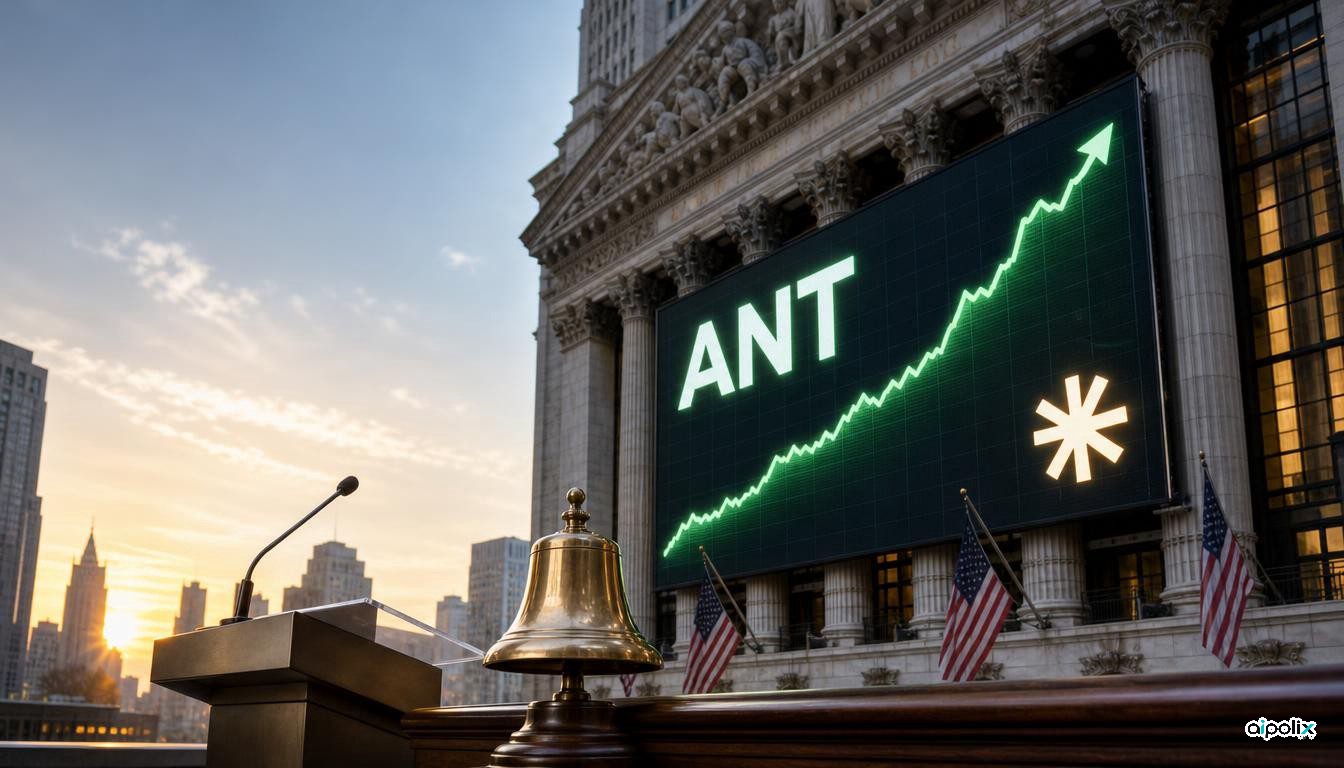
Anthropic became a public company on November 19, 2026, when its shares began trading on the Nasdaq exchange under the ticker ANT. In the first minutes of trading the stock changed hands at about $111.50, roughly a third above the $83 per share at which the offering had been priced the previous day.
That IPO price was itself above the $70 to $78 range the company had signalled to investors. TechCrunch reported that the offering will raise more than $81 billion, split between the company's own treasury and sales by employees and other holders. Combined with earlier fundraising and private offerings timed to coincide with the listing, Anthropic expects to hold about $220 billion in cash, which one analyst quoted by TechCrunch described as more cash than any company has ever had on hand.
The valuation figures depend on which price is used. The Verge put the company's value at around $1.5 trillion at the $83 offer price, while TechCrunch calculated that the opening trade implied a market capitalization above $2 trillion. At that level Anthropic would be worth more than Meta, Tesla or Walmart, and only Apple, Amazon, Alphabet, Nvidia and Microsoft would rank higher. Because the share price kept moving through the morning, these numbers are snapshots rather than settled values.
Chief executive Dario Amodei spoke before the opening bell and used the moment to stress safety. He said the listing strengthens the company's resolve to do the right thing, and that showing it is possible to make sound safety choices while building a successful business could inspire others in the industry, which he called a race to the top. In remarks The Verge attributed to Reuters, he added that Anthropic will pace the training and deployment of AI systems for as long as it takes to be confident they are safe and remain under human control, and will not bend to business or political pressure.
The Verge also summarized the company's S-1 filing. It reported an $80.7 billion net loss in the first half of 2026, mostly from an accounting charge that the outlet said does not reflect the underlying business, against $16.3 billion in revenue. The filing describes a governance structure that keeps control with the founders rather than shareholders, and it lists possible catastrophic risks from the company's own models, including self-preserving behaviors such as resisting shutdown.
For the wider AI industry the debut sets a public benchmark for a frontier lab that sells its models commercially while publishing detailed risk disclosures. Public investors can now price both the revenue growth and the safety commitments, and the company's pledge to slow development when needed will be tested under quarterly reporting pressure.