
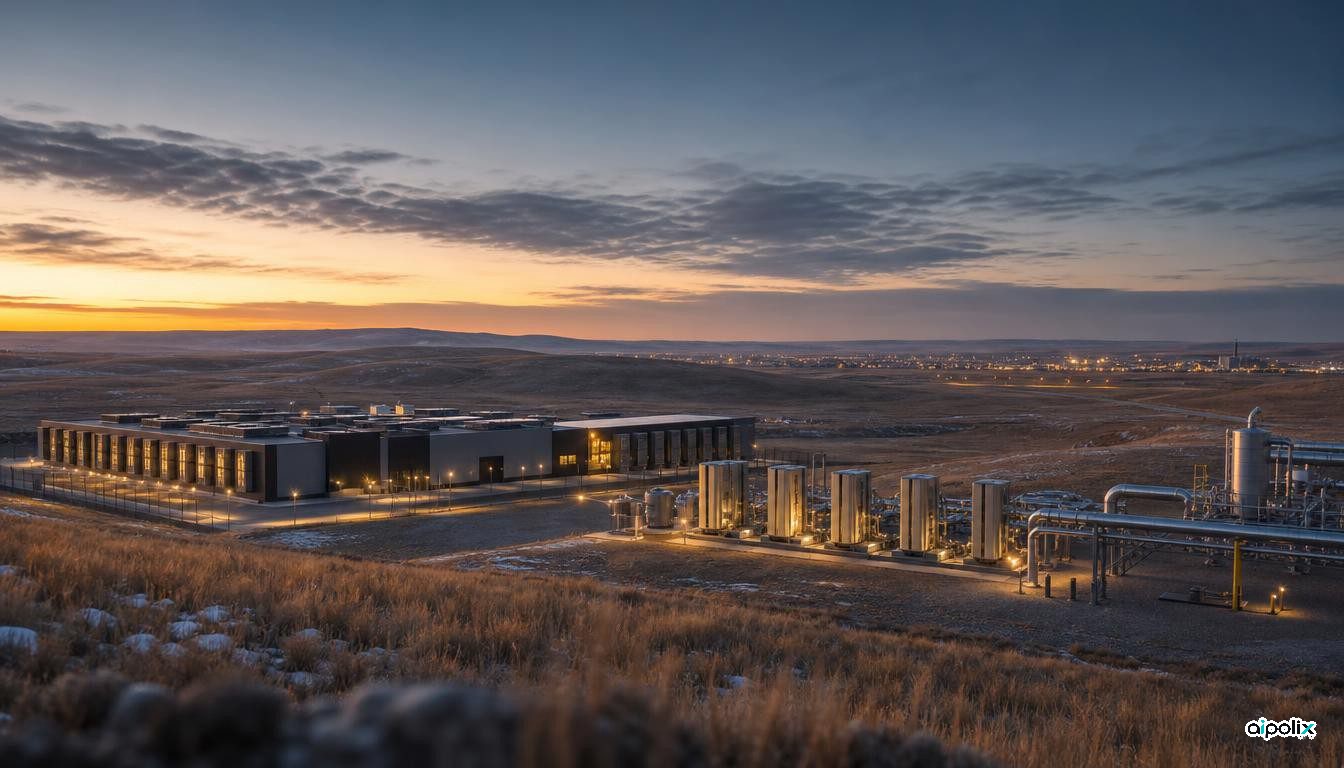
Google on November 5, 2026 said it will build its first data center in Wyoming with a long-term $17 billion investment. The post, by Steve Walter, VP of Global Infrastructure and Energy, names partners Tallgrass Energy, Black Hills Energy, American Electric Power (AEP) and Related Digital, and frames the campus as a jobs and infrastructure bet for Laramie County. Google calls the project its first data center in the Cowboy State and ties the capital plan to local workforce and education grants alongside the power build.
A day later, on November 6, Crusoe confirmed that Google acquired Crusoe's data center site in southeast Wyoming. Crusoe said the deal ends its pre-development role on that campus, which covered site selection, governmental approvals and a hybrid power strategy developed with Tallgrass. CEO Chase Lochmiller said Crusoe still has more than 6 GW contracted and over 40 GW in its pipeline, and that Crusoe remains the developer of Google's Amarillo-area campus in Armstrong County, Texas.
Google's Wyoming plan leans on a novel power and emissions stack. It is contracted with AEP for a commercial-scale 702 MW fuel-cell project with carbon capture and storage, described as the largest of its kind planned so far, with Bloom Energy fuel cells made in the United States. Captured carbon is slated for permanent geologic storage at Tallgrass's Eastern Wyoming Sequestration Hub. Google also cites gas generation from Tallgrass and Black Hills Energy, a FEED study on fitting Tallgrass combined-cycle turbines with CCS, and air cooling to cut local water use.
Independent coverage treated the Crusoe sale as distinct from the investment headline. TechCrunch's Marina Temkin reported that Crusoe sold the unfinished Wyoming project after Google raised concerns about cost and timeline under Crusoe's management, that financial terms were not disclosed, and that Google still plans about $17 billion to develop the campus. Reuters likewise reported Crusoe's confirmation a day after Google's investment announcement.
Community and tax framing sit alongside the AI-infrastructure angle. Google says it will pay for 100% of the power it uses, cover growth-driven infrastructure needs, expect hundreds of millions of dollars in local property taxes for Laramie County and School District 1, and stand up a Community Council with partners after a Cheyenne meeting with more than 200 residents. Vendor claims about job counts, tax yield, CCS performance and water use are Google's and Crusoe's statements, attributed as such. Neither first-party post discloses what Google paid Crusoe for the Wyoming land and entitlements.
For AI desks the story matters as a hyperscaler taking direct control of a large Western U.S. campus while keeping a separate Crusoe build in Texas. It also shows how fuel cells, CCS hubs and community councils are becoming part of the public case for new AI data centers after midterm backlash against data-center growth.