
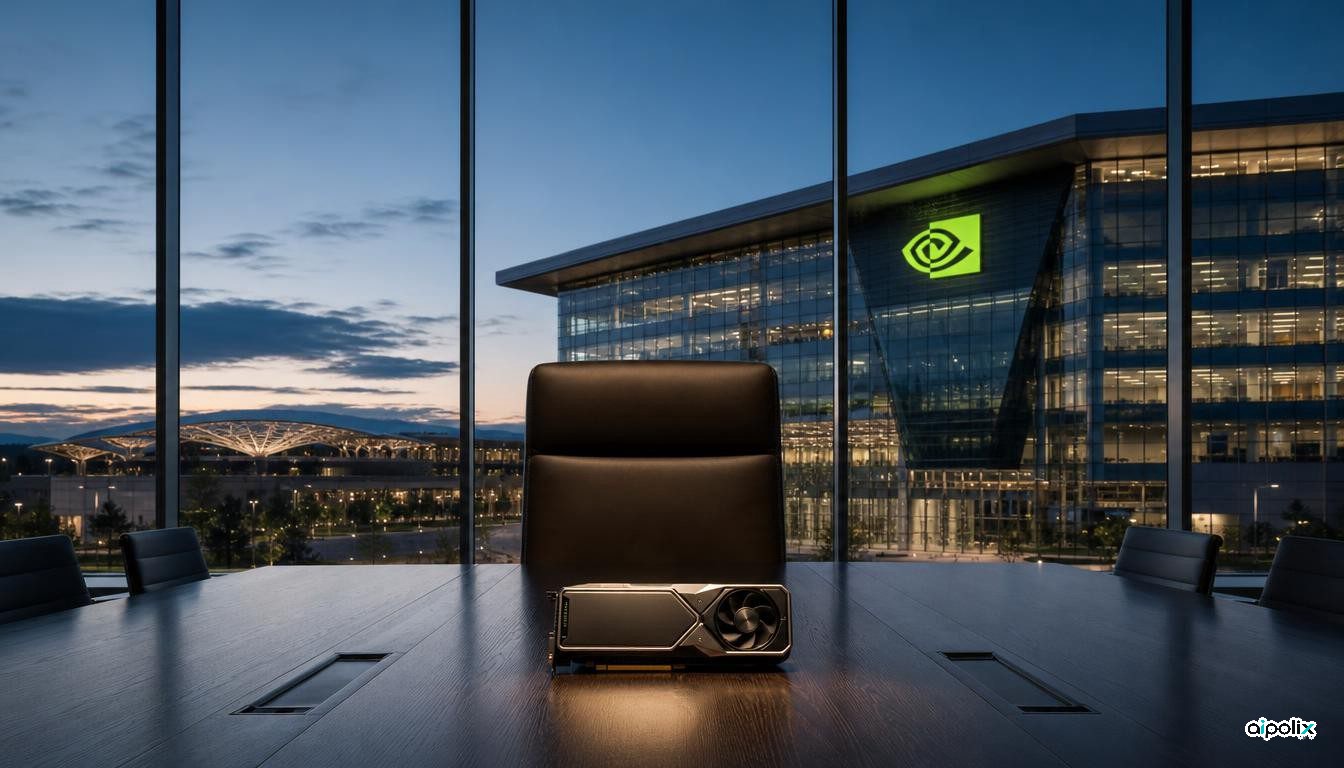
NVIDIA said on November 12, 2026 that Jensen Huang has resigned as president, chief executive officer and member of its board, effective immediately. The announcement came in a newsroom release from the board, which named chief financial officer Colette Kress interim CEO and appointed Harvey C. Jones as the first chair of the board in the company's history. Huang, a co-founder, had led NVIDIA since its founding in 1993, and the release thanks him for what it calls his immeasurable contributions over 33 years.
Kress joined NVIDIA in September 2013 after nearly 25 years in finance roles at technology companies including Cisco and Microsoft. She will keep her CFO duties while serving as interim CEO until a permanent successor is named. The board said it is starting a search and will weigh internal and external candidates. Jones has spent more than 30 years as an entrepreneur, technology executive and venture investor, and previously served as chief executive and executive chairman of Synopsys. The chair role is new: NBC News described its creation as a major governance change at a company that for decades relied on Huang alone.
The statement is short on explanation. It contains no quote from Huang and gives no reason for the resignation. Jones is quoted as saying the board has full confidence in Kress and the leadership team, and that it expects operations, customer commitments and the product roadmap to continue without interruption. Kress says she is committed to building on the foundation Huang created. NVIDIA also confirmed that it will report third-quarter fiscal 2027 results on Tuesday, November 17, at about 1:20 p.m. Pacific time, with the earnings call at 2 p.m., as previously scheduled.
The surrounding context comes from press reporting rather than from the release. The Verge, AP and NBC News all tie the resignation to a scandal that built over the preceding week. The New York Times reported that Huang had a relationship with an executive of Megaspeed, a Singapore-based cloud provider and NVIDIA customer, who was allegedly passing information to China's Ministry of State Security. Huang acknowledged being unfaithful to his wife in a memo to employees over the weekend. NVIDIA's board had already opened an independent investigation into whether he was targeted by foreign intelligence. On Wednesday the Times, citing five people who worked at NVIDIA, reported a second relationship, with an executive who reported to him, and the board met that evening to discuss his future. These accounts rely on anonymous sourcing, and NVIDIA's release does not address them.
The market reacted quickly. Business Insider reported that NVIDIA shares fell more than 10 percent in premarket trading after the announcement. The Verge noted how much weight the company carries: it supplies the chips behind much of current AI development, and it holds an investment portfolio of about 99 billion dollars across frontier labs and cloud providers, a figure it attributed to its own reporting. Outlets have started listing possible permanent successors, but NVIDIA has named no candidate and has not said how long the search will take.
For customers and partners, the practical questions are continuity and timing. The November 17 earnings call will be the first major investor event under interim leadership, and it will show how much of the product roadmap and supply commitments the new management chooses to detail. The outcome of the independent investigation, and whether the board adds further governance changes beyond the new chair, remain open. Until NVIDIA or the board says more, the verified facts are the leadership changes themselves; the reasons behind them rest on press accounts that NVIDIA has not confirmed.