
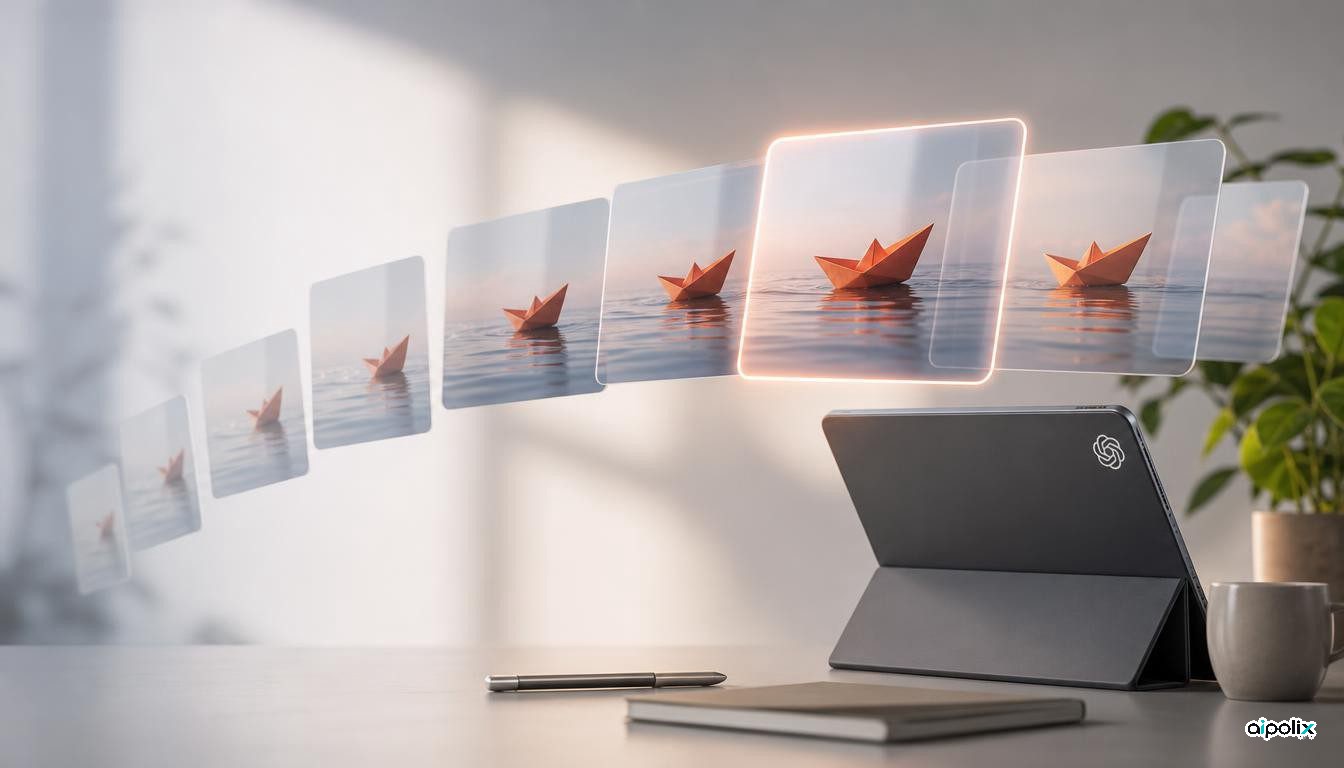
OpenAI introduced Images 2.6 on November 4, 2026, an update to its image generation stack that reaches ChatGPT, Codex and the API at once. The release has two parts: a consumer feature that lets ChatGPT produce animated GIFs, and a pair of new developer models, GPT-Image-2.6 Flare and GPT-Image-2.6 Sunburst, that split the workload between speed and fidelity. OpenAI says the new version generates images about 50% faster than its predecessor.
In ChatGPT, users can now ask for a looping GIF from a text description or upload a still picture and ask for it to be animated. The help center says GIF creation is rolling out gradually. Once a GIF is made, people can change its playback speed, edit it by describing changes in the conversation, and save or share it, although ChatGPT cannot edit an animated file that a user uploads. The Verge, which reported the launch independently, noted that ChatGPT previously could not produce a GIF natively in one step. OpenAI also mentions saved reference images of people, pets and characters that can be reused across creations.
For developers, the split between the two models is the main decision. OpenAI positions Flare for fast iteration: at the low quality setting it can return an image in as little as six seconds, and the company says it handles layouts for posters and product shots better. Sunburst targets detailed work and, at medium or high quality, is meant to keep characters, products and brand elements consistent from one edit to the next. Both support animated output through the Image API by setting the output format to GIF, with between 2 and 64 frames, nine by default, and a per-frame duration of 20 to 2,000 milliseconds. The edit endpoint does not accept GIF output.
The API also gains features that were previously limited to ChatGPT or did not exist. Image markup lets a developer mark the exact area to change. SVG export produces vector files for websites, apps and print, though not from the edit endpoint. A new complexity parameter sets how much planning the model does before drawing, separate from the quality setting that governs detail; OpenAI recommends low complexity for quick edits and higher settings for crowded scenes.
Usage is large and growing. OpenAI says people now create 4 billion images a week across ChatGPT, Codex and the API, more than half a billion a day. The Verge put that against the 3 billion a week the company cited in September. Images 2.6 is available on every ChatGPT tier on web, desktop and mobile, while the image mode with extended reasoning stays limited to Plus, Pro and Business plans.
OpenAI's launch post quotes early API customers, including OpenArt and Figma Weave, which is adding the model to its workflow tool, and points to a system card for its safety evaluations. Speed and consistency claims come from OpenAI and its partners rather than from independent testing, and the company has not published comparative benchmarks against rival image models alongside the release.