
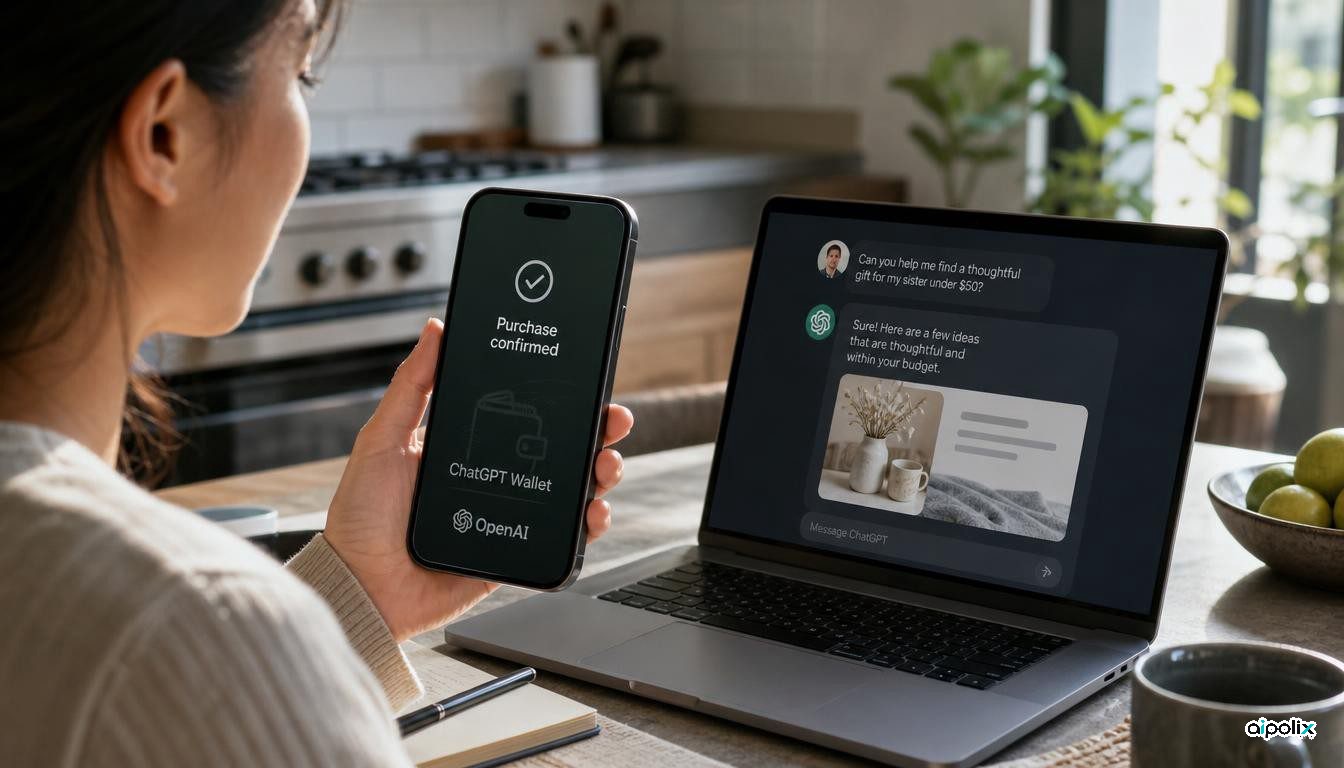
OpenAI on November 13 introduced ChatGPT Wallet, a new way for its agents to complete purchases on a user's behalf. In a first-party post, the company said the wallet is built with American Express, Mastercard and Visa, and that it is "the first wallet that lets agents pay without access to users' actual card details and that requires a security check for every purchase," while still preserving existing card rewards and protections for eligible disputes. TechCrunch's Sarah Perez reported the launch the same day, writing that the option will initially be available to a limited number of U.S. ChatGPT Pro subscribers, ages 18 and up, with a U.S.-issued Visa, Mastercard or American Express.
According to OpenAI, a user adds a card once, then reviews the items, total and selected card before each purchase and approves it with a check such as Face ID or a fingerprint. After approval, the payment network issues a payment token, a substitute number, security code and expiration date, and the charge goes to the selected card without ChatGPT Wallet sharing the actual card details with the business or the agent. OpenAI said users transact directly with businesses, which keep their customer relationships and control over pricing, fulfillment, returns and service. The company also said that, over time, it expects users to be able to pre-approve delegated purchases within parameters such as spending limits, categories or time periods, with added safeguards. That later behavior is a stated expectation, not a feature OpenAI said is available today.
The wallet is rolling out in dots, which TechCrunch describes as OpenAI's agents, so that a dot can complete purchases on a user's behalf. OpenAI limited first availability to ChatGPT Pro subscribers aged 18 and older in the United States with eligible US-issued cards, and said it is starting narrow so it can learn from real-world use and improve compatibility. It noted that some websites may unintentionally block agent purchases, and that risk systems may still decline legitimate agent transactions.
Alongside the wallet, OpenAI said it is publishing a Commerce Partner Playbook with guidance for businesses: claim and verify a business profile in ChatGPT and upload a product feed; configure a CDN or firewall to recognize signed requests using Web Bot Auth so agents are not blocked; work with payment and risk providers; and optionally build a plugin or add WebMCP tools. It said it is working with fraud-prevention partners including Forter, Riskified, Sardine and Signifyd, and payment service providers including Adyen, Checkout.com and Stripe, so their systems can recognize legitimate agent purchases. Quotes from American Express, Mastercard and Visa executives accompanied the post, presenting the launch as an early collaboration rather than a finished, broadly available product.
OpenAI also claimed that 1.2 billion people use ChatGPT each week, many of them to research and compare products. That figure is the company's own and was not independently checked here. The announcement does not give a broader rollout timetable, a list of merchants already known to accept the wallet, or pricing beyond the existing ChatGPT Pro requirement. Until those details are public, ChatGPT Wallet should be read as a limited United States Pro preview of agent checkout, not as a general payments network.