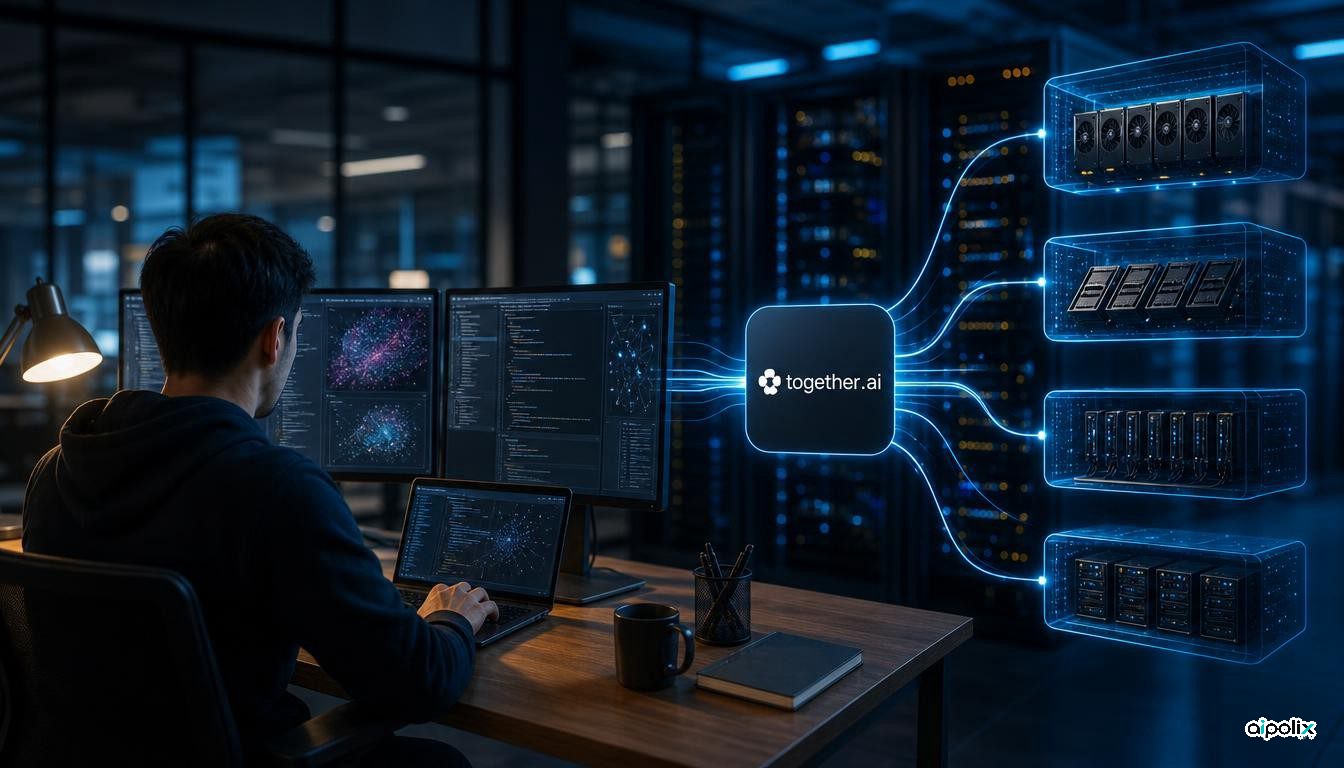
Together AI has launched Together Link, a beta tool designed to let developers keep using familiar coding-agent interfaces while routing model calls to open models served by Together AI. The company says the product works with Claude Code, Claude Desktop, ChatGPT Desktop, Codex, OpenCode and Pi, giving teams a way to change the model layer without replacing the harness, history or day-to-day workflow they already use. Together Link is available for macOS and Linux and uses a Together AI API key for model usage.
The product centers on a routing layer that can choose a model at the start of a session. Together AI describes an Auto Router that examines the initial task and sends simpler work to a lower-cost model while reserving a more capable model for harder sessions. The current lineup advertised by Together includes Kimi K3, GLM 5.3, DeepSeek V4.1 Flash and MiniMax M3. In some Claude configurations, users who provide an Anthropic key can also route difficult work to Claude Opus 5.5. Routing is performed per session rather than continuously switching models during a task, which Together says helps preserve prompt caching behavior.
Together Link also adds cost visibility around agent sessions. The company says proxied terminal sessions print token and dollar totals when they end, while a usage command can summarize recent spending. The product page and launch post market the system as a way to cut coding-agent model costs by more than 50%, with some materials citing a 50% to 80% range compared with using premium closed models for every session. Those figures are vendor claims and depend heavily on workload mix, routing decisions, token usage and the comparison model; AIPolix did not find independent testing that validates the savings claim at launch.
A notable design choice is that Together Link aims to leave the user's existing agent configuration intact. Terminal integrations use temporary settings for a session, while desktop integrations use separate or reversible profiles. This reduces the switching cost for developers who want to test open models without permanently rewriting their existing Claude or Codex configuration. Together describes the tool itself as free and open source, while inference is billed through the user's Together AI account.
The launch reflects a broader shift in the coding-agent market: the interface, orchestration layer and model provider are increasingly separable. If that separation proves reliable in real engineering work, teams could route routine tasks to cheaper models and reserve expensive frontier models for the sessions that actually need them. The main unanswered question is quality under sustained use. Together provides product details and its own cost comparisons, but there is not yet credible independent evidence showing how the router performs across diverse repositories, long-running agent sessions or failure-prone software-engineering tasks.