
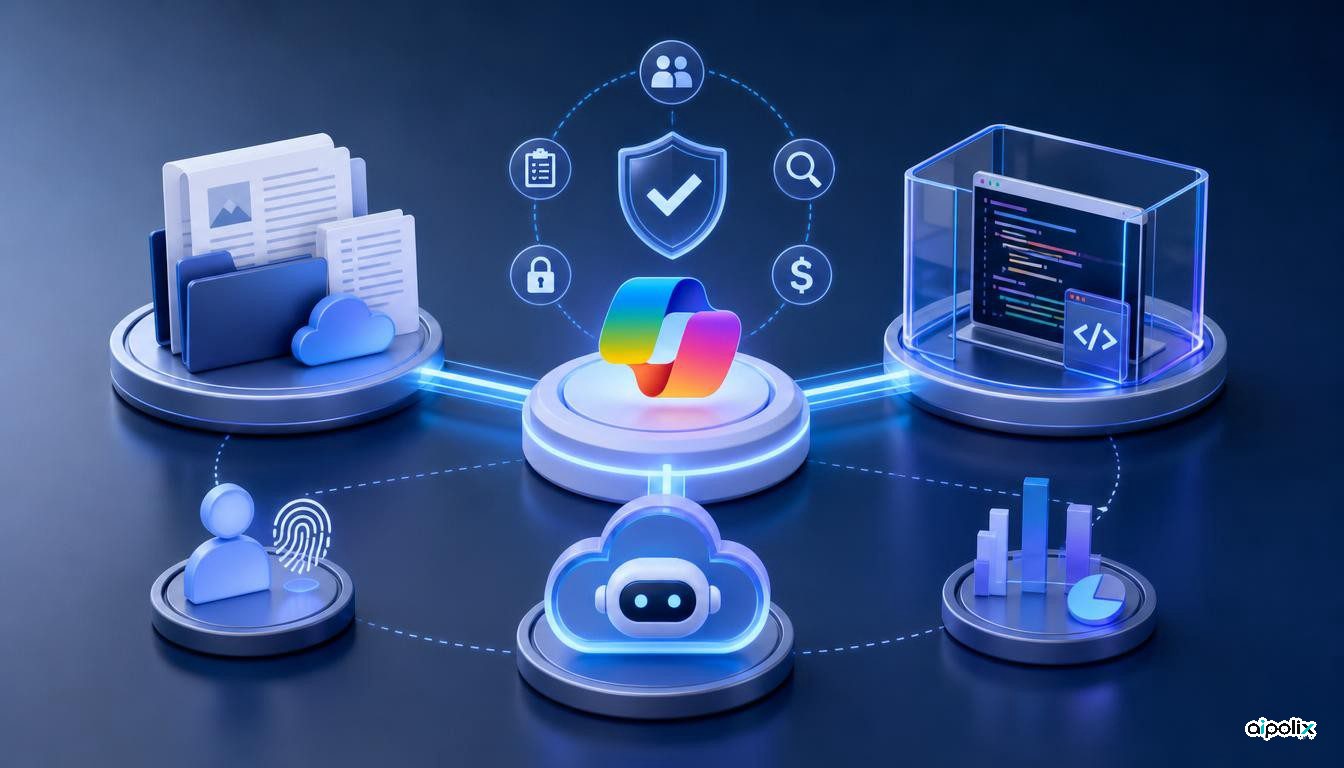
Microsoft has introduced a new Copilot experience built around Home, Code and Autopilot, with a companion Copilot Managed Runtime for executing generated software inside Microsoft 365. The headline is not simply that Copilot gained more features. Microsoft is assembling the pieces of an enterprise agent runtime: a place where users can ask questions, delegate multi-step work, generate small applications and let persistent agents continue operating after the user leaves.
Home combines Chat and Cowork and brings Word, Excel and PowerPoint directly into the Copilot experience. Code lets users describe an app, dashboard, tracker, automation or workflow in natural language and have Copilot build it. Autopilot, previously called Scout, is designed as a persistent cloud-hosted worker that can watch channels, follow up on threads, run recurring work and resume projects days later.
Code changes the unit of work
Microsoft describes Code as a way for non-developers to create purpose-built software rather than stopping at documents, spreadsheets and presentations. The generated software can include desktop widgets, interactive dashboards and cloud-hosted internal applications. Microsoft says Code uses the same underlying technology as GitHub Copilot, runs in a sandboxed environment and can be hosted within the customer’s tenant.
That combination matters more than the natural-language builder itself. Generating an application is relatively easy compared with operating it safely after generation. A business tool needs somewhere to execute, an identity, access to data, permissions, lifecycle controls and a way for administrators to understand what it is doing.
Copilot Managed Runtime is Microsoft’s answer to that operational problem. It is now in preview and is intended to provide governed hosting for code created through Code, Cowork and Copilot Studio, with access also planned for third-party and professional developers.
Autopilot makes persistence a governance problem
Autopilot pushes the architecture further. Microsoft says the agent has its own identity, memory, computer and workspace and can keep working in the cloud while the user is away. It can participate through Teams, Outlook, chats, channels and documents, and is designed to operate with permissions, auditing and governance.
That changes the security boundary. A conventional assistant mostly acts during a visible user interaction. A persistent agent can accumulate state, revisit tasks and perform actions asynchronously. Enterprises therefore need to treat its identity and permissions more like those of a service account or workload than a transient chat session.
The practical question is no longer only whether an agent can complete a task. Administrators need to know what it can access, how long its authority persists, what actions require approval, how activity is audited and how its credentials or memory are revoked when the job ends.
Microsoft is separating chat economics from agent economics
The announcement also makes a useful commercial distinction. Microsoft says everyday Copilot use such as answers, drafts, summaries and analysis remains covered by user subscription licensing. Long-running agentic capabilities including Cowork, Code and Autopilot use usage-based billing.
This split reflects a real infrastructure difference. A chat request is bounded. A persistent agent can consume models, compute and tools over a much longer period, and its cost can vary with the work delegated to it. Microsoft is adding FinOps controls that let administrators manage spending policies, model families and credit requests, while end users can see credit usage and remaining balances.
For buyers, that means agent adoption needs a cost-per-outcome model rather than a simple seat-price comparison. A cheap license can still produce expensive autonomous work if the runtime repeatedly invokes frontier models or long-running tools.
Rollout status matters
The capabilities are not all generally available. Microsoft says Home and Code will begin rolling out through its Frontier program in the coming weeks. Code is expected in preview for Microsoft 365 Premium and Pro subscribers later this year. Autopilot is expanding to private preview at the end of September. Managed Runtime is currently in preview.
That distinction matters when evaluating the announcement. Microsoft has clearly exposed the architecture it wants Copilot to become, but organizations should not treat every component as production-ready today.
The larger direction is nevertheless clear: Copilot is becoming less like a single assistant and more like a governed execution surface for human requests, generated software and persistent agents. The competitive question will increasingly be which platform can make autonomous work observable, controllable and economically predictable—not simply which model writes the best answer.